Table of Contents
- Introduction
- Table of Contents
- What Does Financial Legacy Mean?
- Why Legacy Planning Matters
- The Role of Financial Planning in Legacy Creation
- How Goal-Based Investing Supports Legacy Objectives
- The Importance of Long-Term Wealth Creation
- How SIP Investment Contributes to Legacy Building
- Common Legacy Planning Mistakes
- How Investors Should Approach Legacy Planning
- How KRM Investments Helps Families
Key Takeaways
- Build wealth through disciplined long-term investing.
- Diversification helps manage risk.
- SIP Investment encourages investing consistency.
- Financial Planning should align investments with life goals.
- Periodic portfolio reviews are essential.
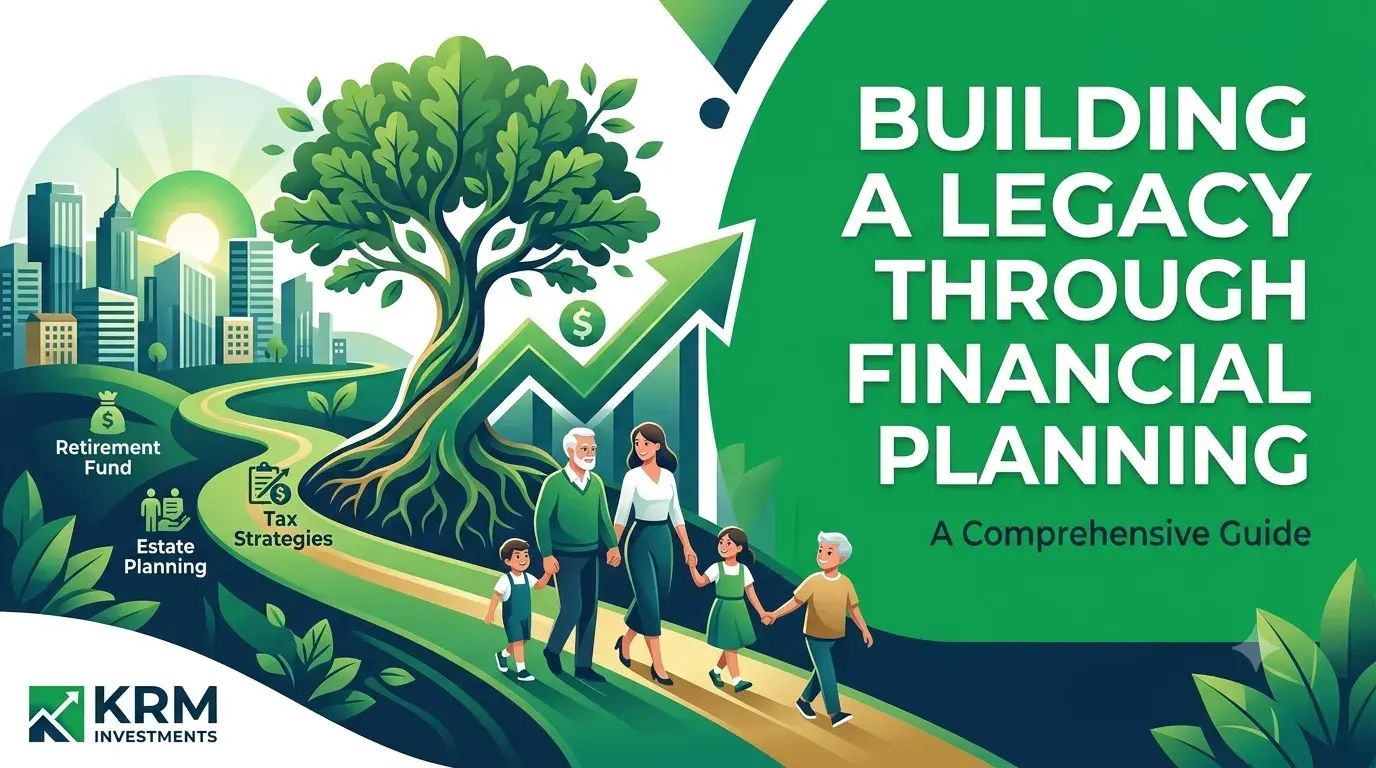
Building a Legacy Through Financial Planning
Introduction
For many investors, financial success is not measured solely by personal wealth accumulation. Beyond achieving individual goals, many people aspire to create a lasting financial legacy that benefits future generations. A well-planned legacy can provide financial security, support family aspirations, preserve values, and create opportunities for children and grandchildren.
Building a legacy does not happen by accident. It requires thoughtful Financial Planning, disciplined investing, long-term decision-making, and a clear understanding of what investors hope to achieve beyond their own lifetime. While wealth creation remains important, legacy planning focuses on how that wealth can continue serving future generations.
At KRM Investments, established in 1997, we have worked with families across different stages of life and wealth accumulation. One common observation is that investors who successfully build a lasting legacy often combine long-term vision with consistent financial discipline.
This article explores how Financial Planning can help investors build a meaningful legacy through Goal-Based Investing, SIP Investment, Wealth Management, and long-term financial stewardship.
Table of Contents
- What Does Financial Legacy Mean?
- Why Legacy Planning Matters
- The Role of Financial Planning in Legacy Creation
- How Goal-Based Investing Supports Legacy Objectives
- The Importance of Long-Term Wealth Creation
- How SIP Investment Contributes to Legacy Building
- Common Legacy Planning Mistakes
- How Investors Should Approach Legacy Planning
- How KRM Investments Helps Families
What Does Financial Legacy Mean?
A financial legacy refers to the wealth, resources, opportunities, and financial stability that an individual leaves behind for future generations.
Legacy planning can involve many objectives, including:
- Providing financial security for family members
- Supporting children's education goals
- Creating retirement confidence for future generations
- Preserving family wealth
- Passing on financial values and discipline
- Supporting charitable or community objectives
A meaningful legacy often extends beyond money and includes responsible financial habits, long-term thinking, and thoughtful decision-making.
Why Legacy Planning Matters
Many investors spend decades building wealth but devote limited attention to how that wealth will be managed or transferred in the future.
Legacy planning matters because it helps:
- Create financial continuity
- Reduce uncertainty for future generations
- Support long-term family objectives
- Protect accumulated wealth
- Encourage responsible financial behavior
Without proper planning, even substantial wealth may not effectively support future family goals.
Financial Planning helps ensure that wealth serves a purpose beyond immediate financial needs.
The Role of Financial Planning in Legacy Creation
Financial Planning serves as the foundation of effective legacy building.
A structured Financial Planning process helps investors:
- Define long-term family objectives
- Coordinate multiple financial goals
- Prepare for Retirement Planning
- Manage investment strategies
- Support Long-Term Wealth Creation
- Align investments with future priorities
Financial Planning helps investors move beyond short-term financial decisions and focus on creating lasting value.
Legacy creation is often most effective when integrated into a broader financial strategy rather than treated as a separate objective.
How Goal-Based Investing Supports Legacy Objectives
Goal-Based Investing provides a practical framework for legacy planning.
Rather than investing without a specific purpose, investors can align investments with clearly defined family and legacy goals.
Examples may include:
- Children's education funding
- Retirement Planning support
- Family wealth preservation
- Future financial independence objectives
- Intergenerational wealth transfer goals
Goal-Based Investing creates greater clarity and helps ensure that investment decisions remain aligned with long-term family priorities.
The Importance of Long-Term Wealth Creation
A meaningful legacy typically requires sustained wealth creation over many years.
Long-Term Wealth Creation focuses on building financial assets gradually through disciplined investing and thoughtful decision-making.
Key principles include:
- Patience
- Consistency
- Diversification
- Risk management
- Long-term perspective
Investors who focus on sustainable wealth accumulation often create stronger foundations for future generations.
Legacy planning is rarely about short-term results. It is about creating lasting financial strength over time.
How SIP Investment Contributes to Legacy Building
SIP Investment is frequently used by investors pursuing long-term financial goals because it promotes disciplined investing habits.
Benefits of SIP Investment include:
- Regular investment contributions
- Long-term financial discipline
- Goal-focused investing
- Support for Wealth Management strategies
- Consistent participation in wealth creation
When combined with Mutual Funds and a structured Financial Planning strategy, SIP Investment can help investors steadily work toward long-term family objectives.
Consistency often plays a larger role in legacy creation than short-term investment decisions.
Common Legacy Planning Mistakes
Many investors unintentionally limit their legacy-building potential by making avoidable mistakes.
- Delaying Financial Planning
- Focusing only on short-term goals
- Ignoring Retirement Planning requirements
- Lack of Goal-Based Investing structure
- Making emotional investment decisions
- Neglecting portfolio reviews
- Failing to communicate long-term objectives
These issues can create uncertainty and reduce the effectiveness of long-term wealth transfer strategies.
Legacy planning requires both financial discipline and long-term vision.
How Investors Should Approach Legacy Planning
Creating a lasting financial legacy begins with a clear strategy and disciplined execution.
- Define long-term family goals.
- Create a comprehensive Financial Planning framework.
- Use Goal-Based Investing principles.
- Implement SIP Investment consistently.
- Maintain diversified portfolios.
- Review investments regularly.
- Support Retirement Planning objectives.
- Focus on sustainable Long-Term Wealth Creation.
Investors who approach legacy planning systematically often create stronger financial foundations for future generations.
A meaningful financial legacy is rarely built through a single investment decision. It is created through years of thoughtful Financial Planning, disciplined investing, and a commitment to long-term family goals.
How KRM Investments Helps Families
Since 1997, KRM Investments has helped families pursue long-term financial success through comprehensive Financial Planning and disciplined investment strategies.
We work with investors to align wealth creation efforts with family goals, retirement objectives, and legacy aspirations while maintaining a long-term perspective.
Our services include:
- Mutual Funds
- SIP Planning
- Financial Planning
- Goal-Based Investing
- Retirement Planning
- Tax Saving Investments
- Wealth Management
By helping investors create structured plans for wealth accumulation and long-term financial stewardship, we support lasting financial confidence and meaningful legacy creation.
Important Note
Every investor has different financial goals, investment horizons and risk tolerance. Investment decisions should always be aligned with your overall Financial Planning strategy.
💡 Pro Tip
Investing consistently through SIPs and reviewing your portfolio annually generally produces better long-term outcomes than trying to time the market.