Table of Contents
Key Takeaways
- Build wealth through disciplined long-term investing.
- Diversification helps manage risk.
- SIP Investment encourages investing consistency.
- Financial Planning should align investments with life goals.
- Periodic portfolio reviews are essential.
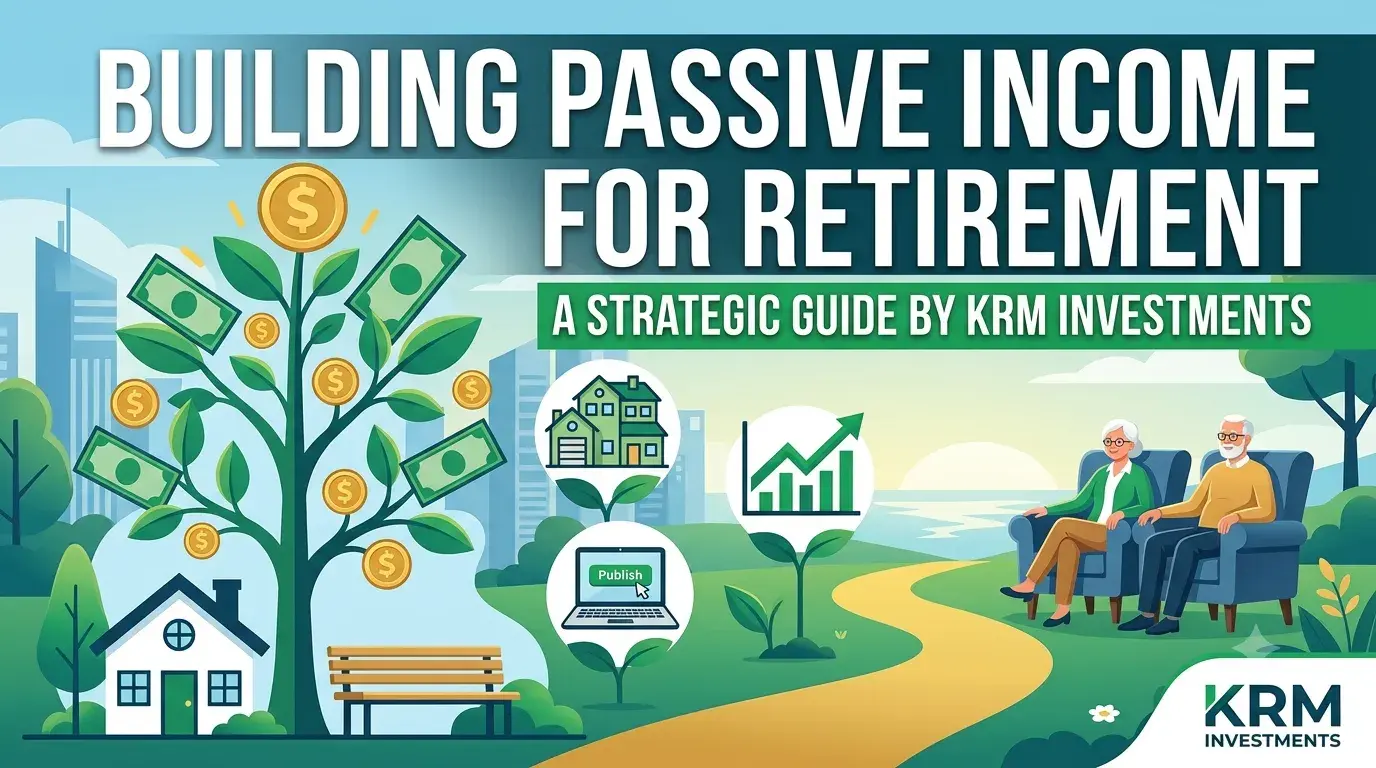
Building Passive Income for Retirement
Introduction
Passive income is one of the most important components of a secure and independent retirement. It refers to income generated from investments or assets that do not require active day-to-day work. For retirees, passive income ensures financial stability and reduces dependence on employment or external support.
At KRM Investments, established in 1997, we have consistently observed that individuals who focus on building passive income early in life achieve greater financial independence during retirement. A well-structured Financial Planning approach is essential for creating sustainable income streams.
This article explains how passive income can be built for retirement and how SIP Investment, Goal-Based Investing, and Wealth Management strategies support long-term financial independence.
Table of Contents
- What Is Passive Income?
- Why Passive Income Matters in Retirement
- Sources of Passive Income
- Role of Financial Planning
- How SIP Investment Helps Build Wealth
- Common Mistakes Investors Make
- How to Build Passive Income for Retirement
- How KRM Investments Helps Investors
What Is Passive Income?
Passive income is money earned from investments or assets with minimal active involvement. Unlike salary income, it continues to flow even without active work.
Examples include:
- Dividends from stocks or Mutual Funds
- Interest from fixed-income instruments
- Rental income from property
- Returns from long-term investments
Why Passive Income Matters in Retirement
During retirement, active income usually stops. Passive income becomes the primary source of financial support.
It helps retirees:
- Maintain lifestyle without employment
- Manage healthcare and living expenses
- Reduce financial stress
- Achieve financial independence
Sources of Passive Income
There are several sources of passive income suitable for retirement planning:
- Mutual Fund investments
- Dividend-paying equities
- Bond and debt instruments
- Systematic Withdrawal Plans (SWP)
- Rental income assets
Role of Financial Planning
Financial Planning helps structure passive income strategies based on individual retirement goals.
It ensures:
- Proper asset allocation
- Income sustainability
- Risk management
- Alignment with Retirement Planning goals
How SIP Investment Helps Build Wealth
SIP Investment helps investors accumulate long-term wealth systematically, which can later be converted into passive income streams.
Benefits include:
- Disciplined investing habits
- Long-term wealth accumulation
- Compounding benefits
- Goal-Based Investing support
Common Mistakes Investors Make
- Relying only on savings accounts for retirement income
- Not planning passive income early
- Ignoring inflation impact
- Lack of Financial Planning
- Overlooking diversification
How to Build Passive Income for Retirement
- Start Financial Planning early.
- Invest regularly through SIP Investment.
- Diversify across asset classes.
- Focus on long-term wealth creation.
- Convert accumulated wealth into income streams.
- Review retirement strategy periodically.
- Align investments with inflation-adjusted goals.
Passive income is not created overnight; it is built through disciplined investing over time.
How KRM Investments Helps Investors
Since 1997, KRM Investments has helped investors build structured strategies for retirement income and Long-Term Wealth Creation.
We focus on helping individuals create sustainable passive income through disciplined Financial Planning and Mutual Fund strategies.
Our services include:
- Mutual Funds
- SIP Planning
- Financial Planning
- Goal-Based Investing
- Retirement Planning
- Tax Saving Investments
- Wealth Management
We help investors achieve financial independence through structured passive income planning.
Important Note
Every investor has different financial goals, investment horizons and risk tolerance. Investment decisions should always be aligned with your overall Financial Planning strategy.
💡 Pro Tip
Investing consistently through SIPs and reviewing your portfolio annually generally produces better long-term outcomes than trying to time the market.