Table of Contents
- Introduction
- Table of Contents
- Why Retirement Planning Matters
- Starting Retirement Planning Too Late
- Underestimating Future Expenses
- Ignoring Inflation and Longevity
- Not Following Goal-Based Investing
- Common SIP Investment Mistakes
- Failing to Review Retirement Plans
- How Investors Should Approach Retirement Planning
- How KRM Investments Helps Investors Prepare for Retirement
Key Takeaways
- Build wealth through disciplined long-term investing.
- Diversification helps manage risk.
- SIP Investment encourages investing consistency.
- Financial Planning should align investments with life goals.
- Periodic portfolio reviews are essential.
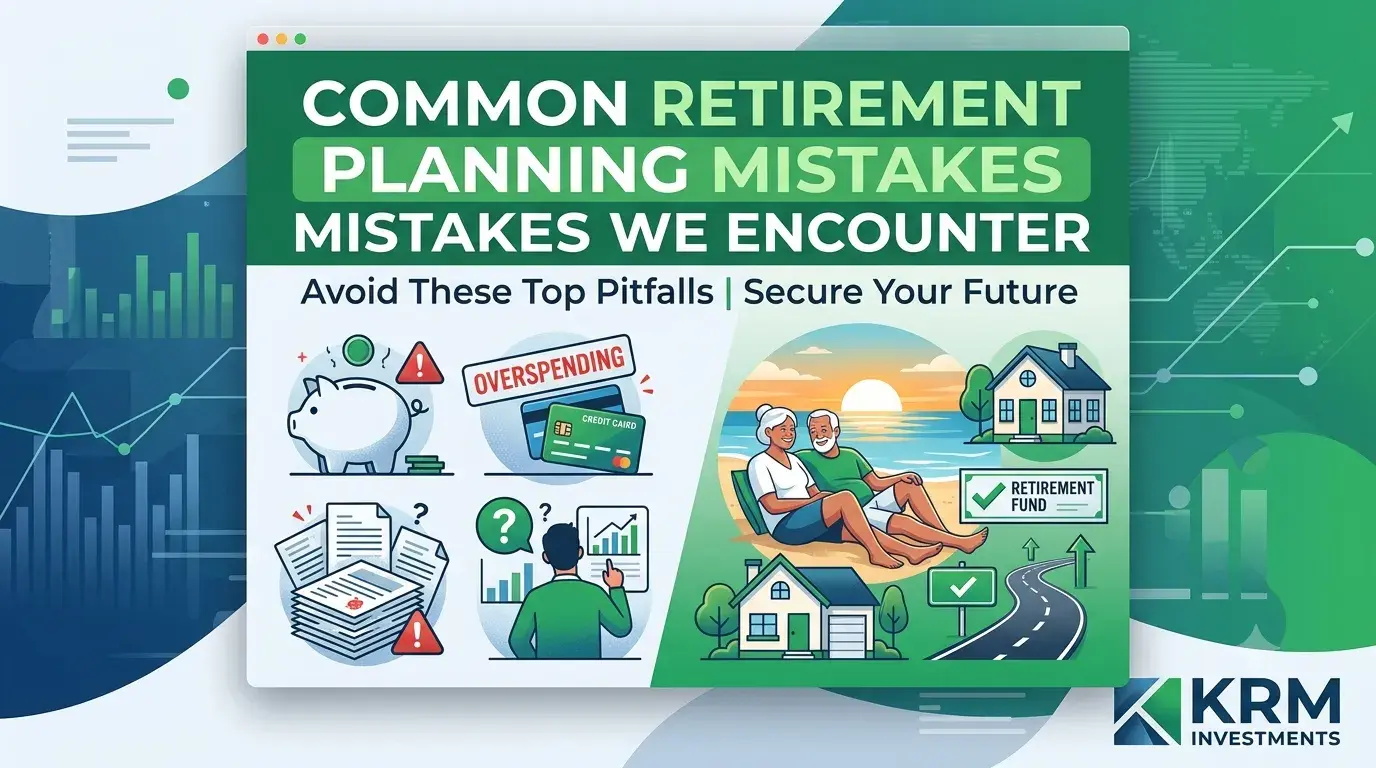
Common Retirement Planning Mistakes We Encounter
Introduction
Retirement Planning is one of the most important aspects of Financial Planning, yet it is often delayed, underestimated, or overlooked altogether. Many investors spend years focusing on career growth, family responsibilities, and immediate financial needs while assuming retirement planning can be addressed later. Unfortunately, postponing retirement preparation can make achieving long-term financial goals significantly more challenging.
At KRM Investments, established in 1997, we have worked with investors across different age groups and financial situations. Over the years, we have observed several recurring retirement planning mistakes that can affect long-term financial security and investor confidence.
The good news is that most retirement planning mistakes are preventable. With proper Financial Planning, disciplined SIP Investment strategies, and a focus on Long-Term Wealth Creation, investors can strengthen their retirement preparedness and create greater financial flexibility for the future.
This article explores some of the most common Retirement Planning mistakes we encounter and offers practical guidance on how investors can avoid them.
Table of Contents
- Why Retirement Planning Matters
- Starting Retirement Planning Too Late
- Underestimating Future Expenses
- Ignoring Inflation and Longevity
- Not Following Goal-Based Investing
- Common SIP Investment Mistakes
- Failing to Review Retirement Plans
- How Investors Should Approach Retirement Planning
Why Retirement Planning Matters
Retirement may span several decades and often represents the longest financial goal many individuals will pursue. Unlike working years, retirement typically involves reduced active income while expenses continue.
Healthcare costs, lifestyle requirements, inflation, and increasing life expectancy can all influence retirement needs. Without adequate preparation, investors may face challenges maintaining financial independence and achieving their desired retirement lifestyle.
Retirement Planning helps investors create a structured roadmap that supports future financial security while balancing current responsibilities and long-term goals.
Starting Retirement Planning Too Late
One of the most common mistakes we encounter is delaying retirement planning.
Many individuals assume retirement is too far away to require immediate attention. Others wait until they achieve certain income levels before beginning their retirement journey.
However, time is often one of the most valuable assets in Retirement Planning. Starting early provides:
- More time for investments to grow
- Greater flexibility in contribution amounts
- Reduced pressure later in life
- More opportunities to benefit from disciplined investing
Even modest contributions started early can become meaningful components of a long-term retirement strategy.
Underestimating Future Expenses
Many investors focus only on their current expenses when estimating retirement needs.
In reality, retirement expenses may include a wide range of financial requirements:
- Daily living costs
- Healthcare expenses
- Travel and leisure activities
- Family support obligations
- Emergency financial needs
- Lifestyle-related spending
Underestimating future expenses can create gaps between expectations and financial preparedness.
A comprehensive Financial Planning process helps investors evaluate future needs more realistically and prepare accordingly.
Ignoring Inflation and Longevity
Another common retirement planning mistake is failing to account for inflation and increasing life expectancy.
Inflation can gradually reduce purchasing power over time, making future expenses higher than many investors initially anticipate.
Similarly, longer life expectancy means retirement savings may need to support financial needs for extended periods.
Retirement Planning should therefore consider:
- Long-term inflation impact
- Future healthcare requirements
- Potential longevity considerations
- Changing lifestyle needs over time
Ignoring these factors may result in unrealistic retirement assumptions and inadequate preparation.
Not Following Goal-Based Investing
Many investors approach retirement investing without clearly defining retirement goals.
Goal-Based Investing helps investors connect their investments directly to specific retirement objectives and timelines.
Benefits of Goal-Based Investing include:
- Greater financial clarity
- Improved investment discipline
- Better progress tracking
- Reduced emotional decision-making
- More effective Investment Planning
When retirement goals are clearly defined, investors often find it easier to stay committed to long-term plans during periods of market uncertainty.
Common SIP Investment Mistakes
SIP Investment is frequently used for Retirement Planning because it supports consistent investing over long periods.
However, investors sometimes make mistakes that reduce its effectiveness.
- Stopping SIPs during market declines
- Investing without defined retirement goals
- Expecting short-term results
- Ignoring portfolio reviews
- Making emotional investment decisions
SIP Investment works best when supported by patience, discipline, and a long-term perspective.
Consistency often plays a more important role than short-term market predictions in retirement investing.
Failing to Review Retirement Plans
Retirement Planning is not a one-time exercise. Financial circumstances, income levels, family responsibilities, and personal goals can change over time.
Regular reviews help investors:
- Monitor progress toward retirement goals
- Adjust strategies when necessary
- Respond to life changes
- Maintain alignment with Financial Planning objectives
Without periodic reviews, investors may unknowingly drift away from their intended retirement goals.
Ongoing evaluation supports better decision-making and long-term financial confidence.
How Investors Should Approach Retirement Planning
A disciplined and structured approach can help investors avoid many common retirement planning mistakes.
Practical steps include:
- Start Retirement Planning as early as possible.
- Define clear retirement goals.
- Create a comprehensive Financial Planning strategy.
- Use SIP Investment consistently.
- Follow Goal-Based Investing principles.
- Review retirement plans regularly.
- Consider inflation and future expenses.
- Focus on Long-Term Wealth Creation.
Retirement security is typically built through consistent actions taken over many years rather than through short-term financial decisions.
The most successful retirement plans are often the result of disciplined investing, thoughtful Financial Planning, and patience over time.
How KRM Investments Helps Investors Prepare for Retirement
Since 1997, KRM Investments has helped investors build retirement-focused Financial Planning strategies aligned with their unique goals and life circumstances.
Our approach emphasizes long-term thinking, disciplined investing, and personalized guidance designed to support retirement confidence.
Our services include:
- Mutual Funds
- SIP Planning
- Financial Planning
- Goal-Based Investing
- Retirement Planning
- Tax Saving Investments
- Wealth Management
By helping investors avoid common mistakes and maintain focus on long-term objectives, we support sustainable wealth creation and financial preparedness for retirement.
Important Note
Every investor has different financial goals, investment horizons and risk tolerance. Investment decisions should always be aligned with your overall Financial Planning strategy.
💡 Pro Tip
Investing consistently through SIPs and reviewing your portfolio annually generally produces better long-term outcomes than trying to time the market.