Table of Contents
- Introduction
- Table of Contents
- Why Election Cycles Matter to Investors
- Understanding Investor Behavior During Elections
- Why Markets React to Political Events
- The Role of Financial Planning
- How SIP Investment Supports Consistency
- Common Election-Year Investment Mistakes
- How Investors Should Approach Election Cycles
- How KRM Investments Helps Investors
- Conclusion
- Call To Action
Key Takeaways
- Build wealth through disciplined long-term investing.
- Diversification helps manage risk.
- SIP Investment encourages investing consistency.
- Financial Planning should align investments with life goals.
- Periodic portfolio reviews are essential.
Election Cycles and Investor Behavior
Introduction
Election years often attract significant attention from investors, financial media, businesses, and policymakers. Political campaigns, policy discussions, economic promises, and changing expectations frequently dominate headlines, leading many investors to wonder how elections might affect their investments and long-term financial goals.
KRM Investments, established in 1997, has guided investors through multiple election cycles, market corrections, economic expansions, and periods of uncertainty. One observation remains consistent across decades: while elections may influence short-term investor sentiment, long-term investment success is usually driven more by disciplined Financial Planning than by political events alone.
Many investors become tempted to make major portfolio changes during election periods. Some delay investments while waiting for results, while others attempt to predict how markets may react to political outcomes. However, history repeatedly demonstrates that financial markets are influenced by a wide range of factors beyond elections.
Understanding the relationship between election cycles and investor behavior can help individuals avoid emotional decision-making and maintain focus on long-term objectives.
In this article, we explore how election cycles influence investor psychology, discuss common mistakes investors make during politically uncertain periods, and explain how Financial Planning, SIP Investment, Goal-Based Investing, and Wealth Management can help maintain long-term discipline.
Table of Contents
- Why Election Cycles Matter to Investors
- Understanding Investor Behavior During Elections
- Why Markets React to Political Events
- The Role of Financial Planning
- How SIP Investment Supports Consistency
- Common Election-Year Investment Mistakes
- How Investors Should Approach Election Cycles
- How KRM Investments Helps Investors
Why Election Cycles Matter to Investors
Elections often create uncertainty because they may influence expectations regarding economic policy, taxation, government spending, regulation, infrastructure development, and other areas that affect businesses and markets.
As a result, investors frequently pay close attention to election-related developments. News coverage intensifies, market commentary becomes more frequent, and investor opinions often become polarized.
While elections can influence market sentiment in the short term, investors should remember that markets are complex systems affected by economic growth, corporate earnings, inflation, interest rates, global events, innovation, and investor expectations.
Focusing exclusively on election outcomes may lead investors to overlook other important drivers of long-term wealth creation.
This is why maintaining perspective is essential during election cycles.
Understanding Investor Behavior During Elections
Election periods often amplify emotions. Investors may become optimistic, cautious, excited, or concerned depending on their expectations about future policies and economic conditions.
Behavioral finance studies suggest that uncertainty often encourages investors to seek clarity, even when complete certainty is impossible. During elections, this desire for certainty may lead investors to postpone decisions or make portfolio adjustments based on assumptions about future events.
Some investors attempt to predict which sectors may benefit from specific policy outcomes. Others may move assets frequently in response to polling data or political news.
Unfortunately, emotional decision-making can sometimes create risks that are unrelated to the actual election outcome.
Successful investors often focus on their long-term goals rather than attempting to react to every political development.
Why Markets React to Political Events
Markets respond not only to actual election results but also to changing expectations. Investors continuously assess how future policies might affect businesses, industries, and economic growth.
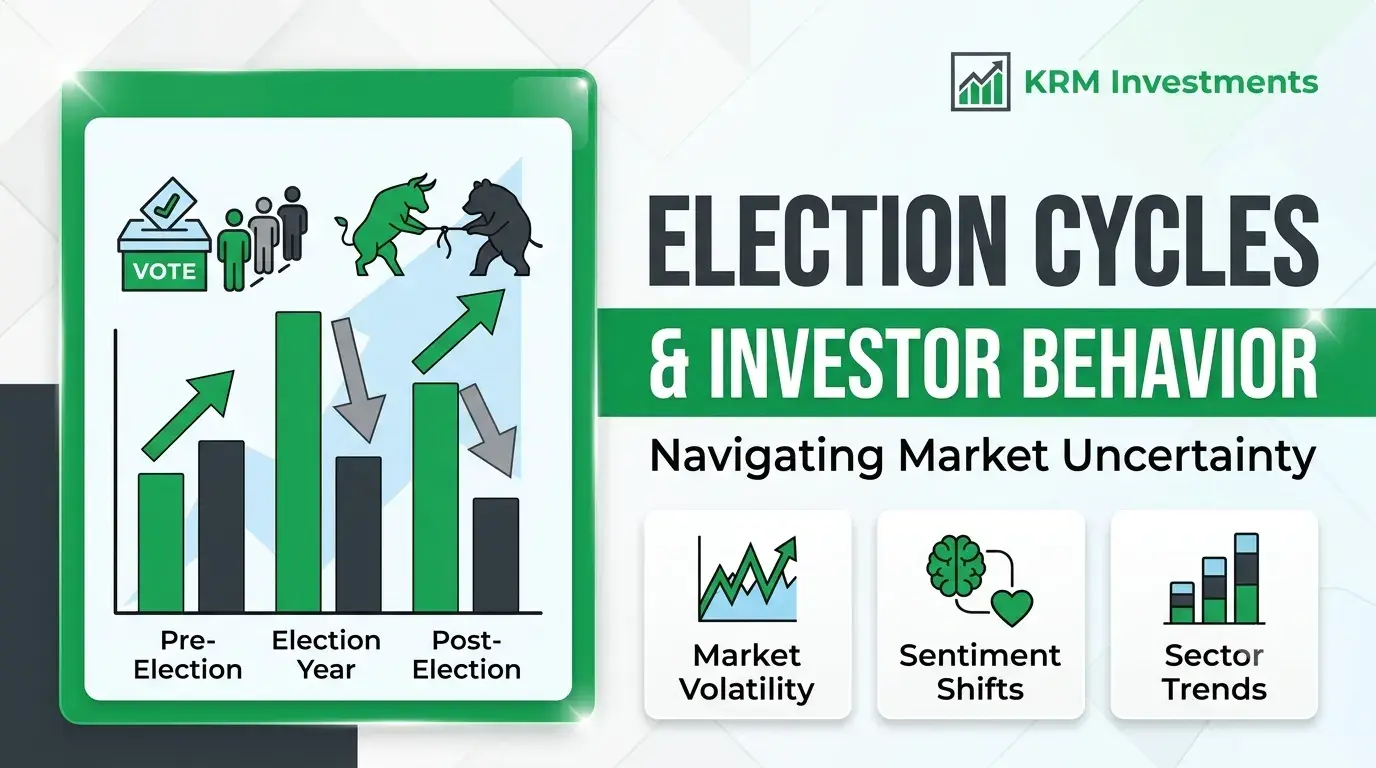
As new information becomes available, market participants adjust their expectations, which can contribute to volatility. This explains why markets may react before elections, immediately after results are announced, or even months later as policies become clearer.
However, short-term reactions do not always determine long-term outcomes. Markets often adapt to changing political environments over time.
Economic fundamentals, business performance, innovation, and investor confidence continue to play significant roles regardless of election results.
Understanding this broader perspective can help investors avoid overreacting to temporary market movements.
The Role of Financial Planning
Financial Planning provides stability during periods of uncertainty by helping investors remain focused on clearly defined goals rather than short-term events.
A comprehensive Financial Planning process identifies objectives, assesses risk tolerance, estimates future needs, and develops investment strategies aligned with long-term priorities.
When election-related volatility occurs, investors with structured plans often find it easier to remain disciplined because their decisions are guided by goals rather than headlines.
Goal-Based Investing further strengthens this approach by connecting investments to meaningful objectives such as Retirement Planning, children's education, home ownership, or financial independence.
Financial Planning transforms uncertainty into something that can be managed rather than feared.
How SIP Investment Supports Consistency
SIP Investment can be particularly valuable during election cycles because it encourages regular investing regardless of market sentiment.
Instead of attempting to predict election outcomes or market reactions, investors continue contributing according to a predetermined schedule.
This disciplined approach reduces the temptation to make emotional decisions based on political developments or short-term market movements.
Mutual Funds accessed through SIP Investment can support diversified Investment Planning strategies while helping investors maintain focus on long-term objectives.
Consistency often proves more valuable than prediction when pursuing Long-Term Wealth Creation.
Common Election-Year Investment Mistakes
Election cycles can encourage behaviors that may not support long-term financial success.
- Delaying investments until election results are announced.
- Making portfolio changes based solely on political opinions.
- Attempting to predict short-term market movements.
- Stopping SIP Investment contributions during uncertainty.
- Allowing media headlines to drive investment decisions.
- Ignoring Financial Planning objectives.
- Overreacting to temporary volatility.
- Taking excessive risks based on election expectations.
- Neglecting diversification.
- Focusing on politics instead of long-term goals.
Recognizing these mistakes can help investors maintain discipline and improve decision quality.
How Investors Should Approach Election Cycles
Investors should begin by accepting that elections are one of many factors influencing financial markets. While political developments may create uncertainty, they should not automatically trigger major changes to long-term investment strategies.
A practical approach includes maintaining Financial Planning discipline, continuing SIP Investment contributions, reviewing goals periodically, and ensuring portfolios remain aligned with risk tolerance and investment horizons.
Goal-Based Investing provides valuable perspective because it keeps attention focused on future objectives rather than short-term events.
Wealth Management principles such as diversification, regular reviews, and long-term thinking can further support confidence during election periods.
The objective should be to make decisions based on financial needs rather than political emotions.
How KRM Investments Helps Investors
KRM Investments has been helping investors since 1997 navigate market cycles, economic changes, and periods of uncertainty. Our approach emphasizes Financial Planning, SIP Investment, Mutual Funds, Goal-Based Investing, Retirement Planning, Tax Saving Investments, and Wealth Management.
We believe that successful investing requires discipline, patience, and alignment with long-term goals. Rather than reacting to short-term political developments, investors benefit from structured planning and consistent decision-making.
Every investor's situation is unique, which is why personalized guidance remains an important part of effective Investment Planning.
Conclusion
Election cycles often generate uncertainty, but they should not distract investors from their long-term financial objectives. While markets may react to political developments in the short term, long-term wealth creation is typically driven by disciplined investing, thoughtful Financial Planning, and consistent execution.
Investors who maintain perspective, avoid emotional decision-making, and remain committed to their goals are often better positioned to navigate election-related volatility successfully.
By focusing on Goal-Based Investing, Retirement Planning, SIP Investment, Wealth Management, and Long-Term Wealth Creation, investors can approach election cycles with greater confidence and clarity.
Call To Action
If you would like guidance on Mutual Funds, SIP Planning, Financial Planning, Retirement Planning, Tax Saving Investments, or Wealth Management, connect with KRM Investments.
With experience dating back to 1997, our team helps investors build disciplined, goal-oriented strategies designed to support long-term financial confidence and informed decision-making.
Important Note
Every investor has different financial goals, investment horizons and risk tolerance. Investment decisions should always be aligned with your overall Financial Planning strategy.
💡 Pro Tip
Investing consistently through SIPs and reviewing your portfolio annually generally produces better long-term outcomes than trying to time the market.