Table of Contents
- Introduction
- Table of Contents
- Why Financial Planning Mistakes Matter
- Failing to Define Clear Financial Goals
- Starting Investments Too Late
- Ignoring Retirement Planning
- Investing Without Goal-Based Investing Principles
- Common SIP Investment Mistakes
- Neglecting Risk Management and Diversification
- How Investors Should Approach Financial Planning
- How KRM Investments Helps Investors
Key Takeaways
- Build wealth through disciplined long-term investing.
- Diversification helps manage risk.
- SIP Investment encourages investing consistency.
- Financial Planning should align investments with life goals.
- Periodic portfolio reviews are essential.
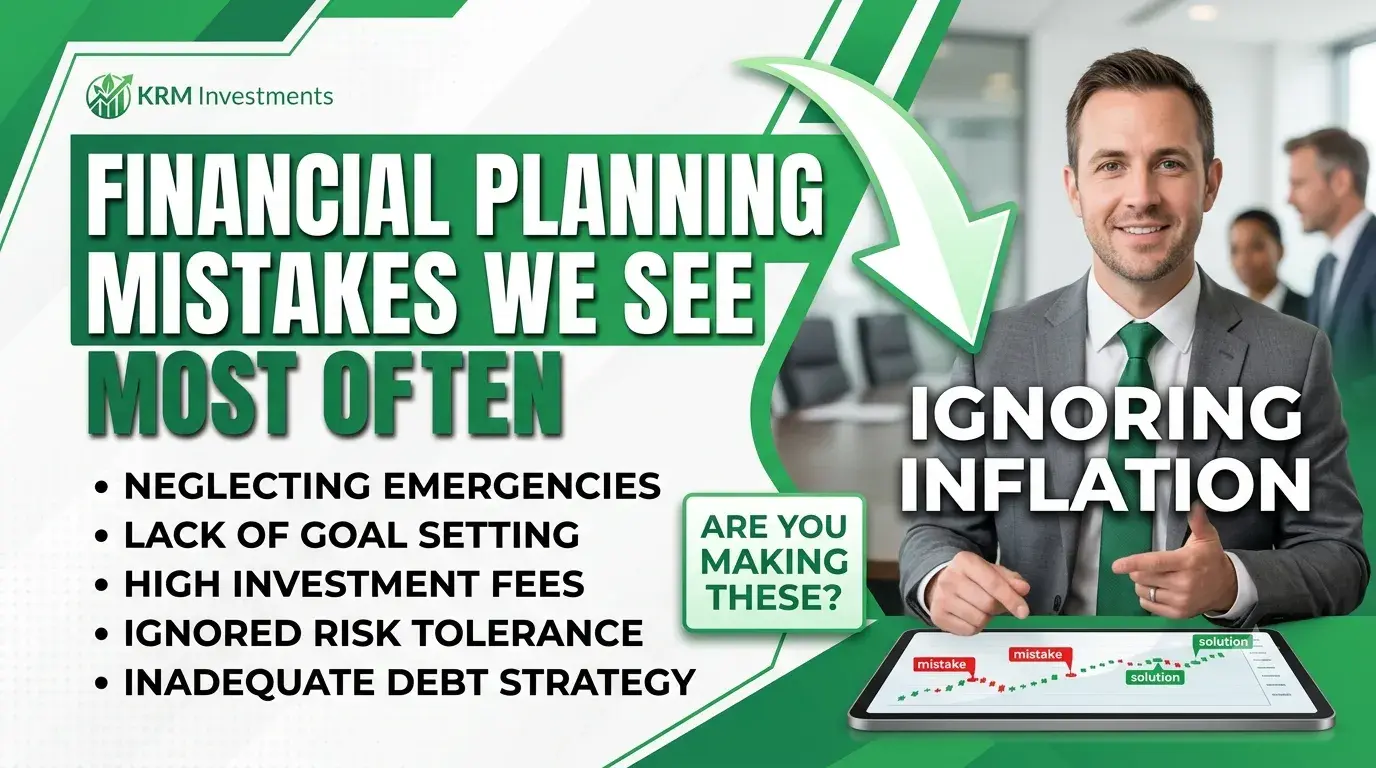
Financial Planning Mistakes We See Most Often
Introduction
Financial Planning is one of the most important foundations of long-term financial success. Yet many investors, regardless of income level or investment experience, make mistakes that can slow progress toward their financial goals. Often, these mistakes are not caused by a lack of intelligence or effort but by inadequate planning, emotional decision-making, or simply overlooking important aspects of personal finance.
At KRM Investments, established in 1997, we have worked with investors across different life stages and financial situations. Over the years, we have observed recurring patterns that frequently prevent individuals and families from achieving their full financial potential.
The encouraging news is that most Financial Planning mistakes can be identified and corrected. By understanding common pitfalls and adopting a disciplined approach, investors can improve their Investment Planning strategies and strengthen their path toward Long-Term Wealth Creation.
This article explores some of the most common Financial Planning mistakes we encounter and provides practical guidance for avoiding them.
Table of Contents
- Why Financial Planning Mistakes Matter
- Failing to Define Clear Financial Goals
- Starting Investments Too Late
- Ignoring Retirement Planning
- Investing Without Goal-Based Investing Principles
- Common SIP Investment Mistakes
- Neglecting Risk Management and Diversification
- How Investors Should Approach Financial Planning
Why Financial Planning Mistakes Matter
Small financial mistakes can have significant long-term consequences. Decisions made today often affect future opportunities, financial flexibility, and overall wealth accumulation.
Without proper Financial Planning, investors may struggle to achieve important goals such as children's education, retirement security, home ownership, or wealth creation. In some cases, mistakes may lead to unnecessary financial stress or missed opportunities.
Recognizing these challenges early can help investors make more informed decisions and maintain better control over their financial future.
Failing to Define Clear Financial Goals
One of the most common Financial Planning mistakes is investing without a clear purpose.
Many investors start investing because they know it is important, but they do not define specific objectives. Without clear goals, it becomes difficult to determine investment timelines, risk tolerance, and appropriate strategies.
Examples of common financial goals include:
- Children's education
- Retirement Planning
- Home purchase
- Emergency fund creation
- Long-Term Wealth Creation
- Family financial security
Goal-Based Investing helps investors connect investments directly to meaningful outcomes. This often improves discipline and decision-making throughout the investment journey.
Starting Investments Too Late
Many individuals postpone investing because they believe they will start once income increases or financial conditions improve.
Unfortunately, delaying investments can reduce the amount of time available for compounding and long-term growth.
Even modest but consistent investments made early can potentially have a meaningful impact over extended periods.
Some common reasons for delaying investments include:
- Waiting for the perfect time
- Fear of market volatility
- Lack of Financial Planning
- Competing short-term priorities
Starting early allows investors more flexibility and often reduces the pressure associated with achieving future financial goals.
Ignoring Retirement Planning
Retirement Planning is frequently overlooked, especially by younger investors who view retirement as a distant objective.
However, retirement is often one of the largest financial goals an individual will face. Delaying Retirement Planning may require significantly higher savings efforts later in life.
Effective Retirement Planning typically involves:
- Estimating future expenses
- Accounting for inflation
- Creating long-term investment strategies
- Reviewing progress regularly
- Maintaining investment discipline
Early preparation provides greater flexibility and helps investors build financial confidence for the future.
Investing Without Goal-Based Investing Principles
Another common mistake involves treating all investments as a single pool without connecting them to specific objectives.
Goal-Based Investing creates structure and helps investors align financial decisions with personal priorities.
Benefits of Goal-Based Investing include:
- Clear investment purpose
- Improved financial discipline
- Better progress measurement
- Reduced emotional decision-making
- More effective Investment Planning
When investors understand why they are investing, they are often more likely to remain committed during periods of market uncertainty.
Common SIP Investment Mistakes
SIP Investment is widely used for long-term investing, but investors can still make mistakes that reduce its effectiveness.
Some common SIP Investment mistakes include:
- Stopping SIPs during market declines
- Starting without defined goals
- Expecting immediate results
- Ignoring periodic reviews
- Investing inconsistently
SIP Investment works best when combined with patience, discipline, and a long-term perspective.
Investors should view SIPs as part of a broader Financial Planning strategy rather than a short-term market opportunity.
Neglecting Risk Management and Diversification
Many investors focus exclusively on returns while paying insufficient attention to risk.
Diversification and risk management play important roles in building resilient portfolios.
Common mistakes include:
- Concentrating investments in a single asset class
- Following investment trends without research
- Ignoring risk tolerance
- Making emotional decisions during volatility
Financial Planning should include a balanced approach that considers both growth opportunities and risk management requirements.
Diversification can help investors navigate changing market conditions while maintaining focus on long-term goals.
How Investors Should Approach Financial Planning
A structured Financial Planning process can help investors avoid many common mistakes.
Practical steps include:
- Define clear financial goals.
- Create a Goal-Based Investing strategy.
- Start investing as early as possible.
- Use SIP Investment for disciplined investing.
- Prioritize Retirement Planning.
- Maintain diversified portfolios.
- Review investments periodically.
- Focus on Long-Term Wealth Creation rather than short-term market movements.
Financial success rarely depends on perfect decisions. More often, it results from consistent habits, thoughtful planning, and disciplined execution over time.
The most successful investors are not necessarily those who avoid every mistake. They are often the ones who recognize mistakes early, learn from them, and remain committed to their long-term goals.
How KRM Investments Helps Investors
Since 1997, KRM Investments has helped investors build structured Financial Planning strategies aligned with their unique financial goals and life circumstances.
Our approach focuses on long-term discipline, goal clarity, and informed decision-making.
Our services include:
- Mutual Funds
- SIP Planning
- Financial Planning
- Goal-Based Investing
- Retirement Planning
- Tax Saving Investments
- Wealth Management
By helping investors identify potential challenges and implement effective strategies, we support long-term financial confidence and sustainable wealth creation.
Important Note
Every investor has different financial goals, investment horizons and risk tolerance. Investment decisions should always be aligned with your overall Financial Planning strategy.
💡 Pro Tip
Investing consistently through SIPs and reviewing your portfolio annually generally produces better long-term outcomes than trying to time the market.