Table of Contents
Key Takeaways
- Build wealth through disciplined long-term investing.
- Diversification helps manage risk.
- SIP Investment encourages investing consistency.
- Financial Planning should align investments with life goals.
- Periodic portfolio reviews are essential.
How Does Inflation Affect My Savings?
Introduction
Many people feel confident when they see their savings account balance growing over time. However, one important factor is often overlooked: inflation. While savings may increase in numerical value, inflation can gradually reduce what that money is actually able to purchase in the future.
KRM Investments, established in 1997, has helped investors navigate changing economic conditions, market cycles, and long-term financial goals. One lesson that remains relevant across generations is that understanding inflation is essential for effective Financial Planning.
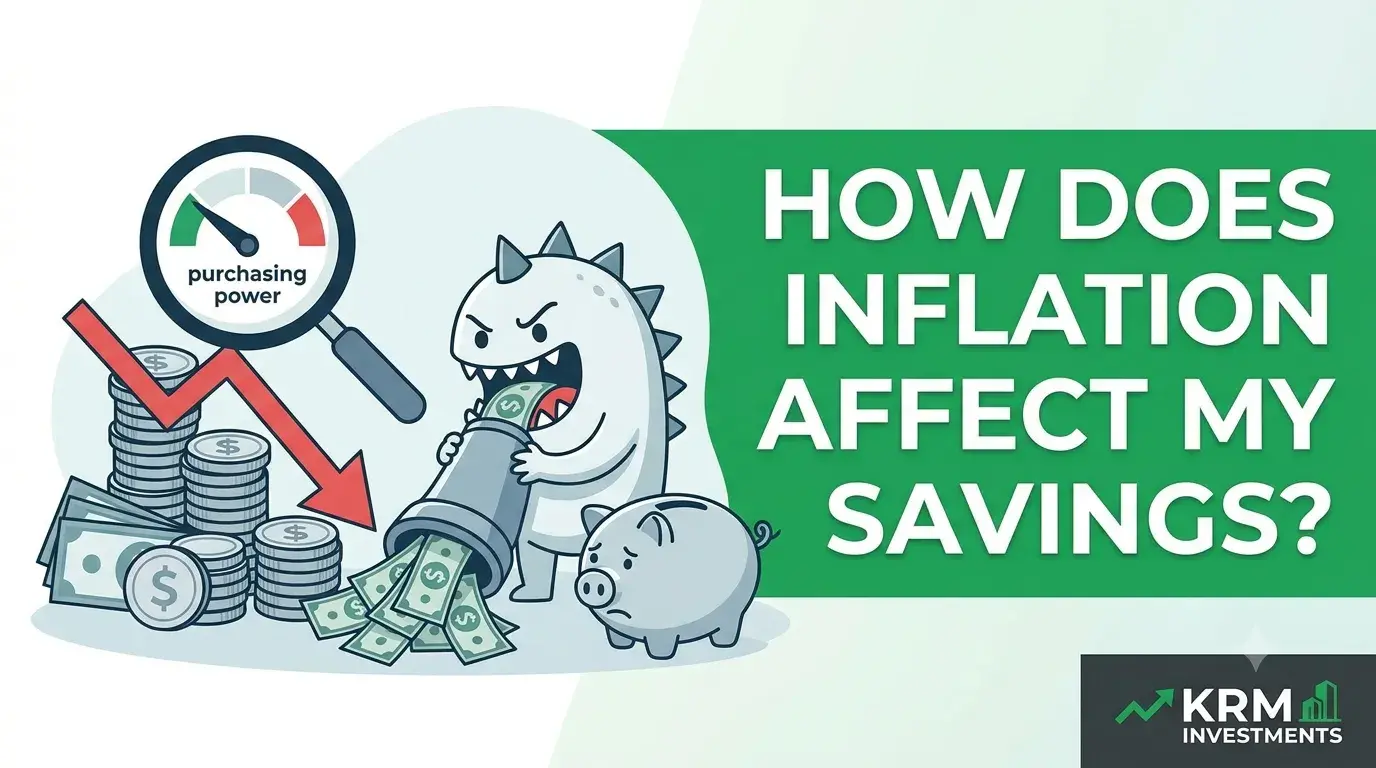
Inflation is a natural part of the economy. Over time, the cost of goods and services tends to rise. As prices increase, the purchasing power of money decreases. This means that the same amount of money may buy fewer goods and services in the future than it does today.
For investors pursuing Retirement Planning, children's education goals, Wealth Management, or Long-Term Wealth Creation, inflation can significantly influence future financial outcomes. Ignoring inflation may result in underestimating future financial needs and creating gaps between expectations and reality.
In this article, we explore how inflation affects savings, why it matters to investors, and how Financial Planning, SIP Investment, Goal-Based Investing, and disciplined Investment Planning can help address inflation-related challenges.
Table of Contents
- Why Inflation Matters
- Understanding Inflation
- How Inflation Affects Savings
- Real-Life Examples of Inflation Impact
- Role of Financial Planning
- How SIP Investment Can Help
- Common Mistakes Investors Make
- How Investors Should Approach Inflation
Why Inflation Matters
Inflation affects nearly every aspect of personal finance. From household expenses and healthcare costs to education fees and retirement requirements, rising prices influence how much money individuals need to achieve their goals.
Many investors focus primarily on growing savings balances. However, what ultimately matters is purchasing power rather than numerical balances alone.
If prices increase over time, money that remains idle may lose value in real terms. While the account balance may appear unchanged or even increase slightly, its ability to purchase goods and services may decline.
This is why inflation is often described as a silent challenge. Its effects may not be immediately visible, but they can become significant over long periods.
Understanding inflation allows investors to make more informed decisions regarding savings, investing, and long-term Financial Planning.
Understanding Inflation
Inflation refers to the general increase in prices across an economy over time. As prices rise, the purchasing power of money declines.
For example, a product that costs a certain amount today may cost considerably more several years in the future. Similarly, expenses related to healthcare, education, housing, transportation, and daily living often increase over time.
Inflation does not affect every category equally, and actual experiences may vary between individuals. However, most long-term financial plans should account for the possibility that future expenses will be higher than current expenses.
Financial Planning seeks to address this reality by estimating future costs rather than relying solely on present-day numbers.
Recognizing inflation as a long-term factor helps investors create more realistic and sustainable financial strategies.
How Inflation Affects Savings
The most direct effect of inflation is the reduction of purchasing power. When inflation rises faster than the growth of savings, individuals may effectively lose financial ground despite maintaining positive account balances.
Consider a simple example. If the cost of living rises steadily over many years, an amount that appears substantial today may not provide the same level of financial security in the future.
This challenge becomes especially important for long-term goals. Retirement Planning, children's education funding, and major life objectives often involve timelines extending decades into the future.
Without accounting for inflation, investors may underestimate how much money will ultimately be required to achieve these goals.
As a result, inflation becomes an important consideration within Investment Planning and Wealth Management strategies.
Real-Life Examples of Inflation Impact
Inflation can affect financial goals in numerous ways.
Consider a family planning for a child's higher education. The cost of education today may differ significantly from costs ten or fifteen years later. If inflation is ignored, savings targets may prove insufficient.
Retirement Planning provides another example. Future retirees must consider not only their expected lifestyle but also how inflation may affect healthcare expenses, housing costs, transportation needs, and daily living expenses.
Similarly, individuals saving for home ownership or financial independence may discover that future costs exceed current estimates if inflation is not incorporated into planning assumptions.
These examples demonstrate why inflation should be viewed as an ongoing component of long-term Financial Planning rather than a temporary economic phenomenon.
Role of Financial Planning
Financial Planning helps investors prepare for inflation by incorporating future cost projections into goal-setting and investment strategies.
Rather than basing plans solely on current expenses, Financial Planning estimates how financial needs may evolve over time. This creates more realistic savings targets and investment objectives.
Goal-Based Investing becomes particularly valuable because it connects investments directly to future financial requirements. By estimating future goal costs, investors can develop strategies designed to address inflation's long-term effects.
Financial Planning also encourages periodic reviews. As economic conditions, personal circumstances, and financial goals change, plans can be adjusted accordingly.
This structured approach helps investors maintain confidence and clarity despite uncertainties related to future price increases.
How SIP Investment Can Help
SIP Investment is often used by investors pursuing long-term financial goals because it encourages consistency and disciplined investing.
Through regular investments in Mutual Funds, investors gradually build portfolios aligned with their objectives. Rather than waiting for ideal market conditions, they focus on maintaining consistent contributions over time.
SIP Investment supports long-term planning by encouraging investors to remain committed to financial goals despite short-term market fluctuations.
When combined with Financial Planning and Goal-Based Investing, SIPs can help investors pursue growth-oriented strategies designed to address future financial needs.
While no investment can eliminate inflation risk entirely, disciplined investing often plays an important role in long-term wealth creation strategies.
Common Mistakes Investors Make
Many investors underestimate the impact of inflation or fail to account for it adequately within their financial plans.
- Assuming current expenses will remain unchanged indefinitely.
- Keeping excessive savings idle for long periods.
- Ignoring inflation when setting financial goals.
- Delaying Retirement Planning.
- Failing to review financial plans regularly.
- Investing without clear objectives.
- Underestimating future education or healthcare costs.
- Focusing only on nominal savings balances.
- Neglecting Goal-Based Investing principles.
- Allowing short-term concerns to overshadow long-term planning.
Recognizing these mistakes can help investors create more resilient financial strategies.
How Investors Should Approach Inflation
Investors should view inflation as a permanent factor within long-term Financial Planning rather than a temporary concern. Understanding its impact can help create more realistic expectations and stronger investment strategies.
A practical approach includes setting clear financial goals, estimating future costs, reviewing plans regularly, and maintaining disciplined investment habits. Goal-Based Investing provides structure by linking investments to specific future objectives.
SIP Investment can help investors maintain consistency, while diversified Mutual Funds may support broader Investment Planning goals. Regular reviews ensure that strategies remain aligned with evolving financial needs.
Investors should also focus on purchasing power rather than simply accumulating money. The ultimate objective is not merely increasing balances but preserving and enhancing the ability to achieve future goals.
Inflation affects everyone, but its impact can be managed through awareness, preparation, and disciplined planning. By integrating Financial Planning, SIP Investment, Goal-Based Investing, Retirement Planning, Wealth Management, and long-term Investment Planning principles, investors can better prepare for rising costs and pursue sustainable Long-Term Wealth Creation. Understanding inflation is not about predicting the future; it is about preparing thoughtfully for it.
Important Note
Every investor has different financial goals, investment horizons and risk tolerance. Investment decisions should always be aligned with your overall Financial Planning strategy.
💡 Pro Tip
Investing consistently through SIPs and reviewing your portfolio annually generally produces better long-term outcomes than trying to time the market.