Table of Contents
- Introduction
- Table of Contents
- Why Education Planning Matters
- Understanding Children's Education Goals
- Role of Financial Planning in Education Funding
- Role of SIP Investment for Education Goals
- Importance of Goal-Based Investing
- Common Mistakes Families Make
- How Families Should Approach Education Planning
- How KRM Investments Helps Families Plan
Key Takeaways
- Build wealth through disciplined long-term investing.
- Diversification helps manage risk.
- SIP Investment encourages investing consistency.
- Financial Planning should align investments with life goals.
- Periodic portfolio reviews are essential.
How Families Can Prepare for Children's Education Goals Through Smart Financial Planning
Introduction
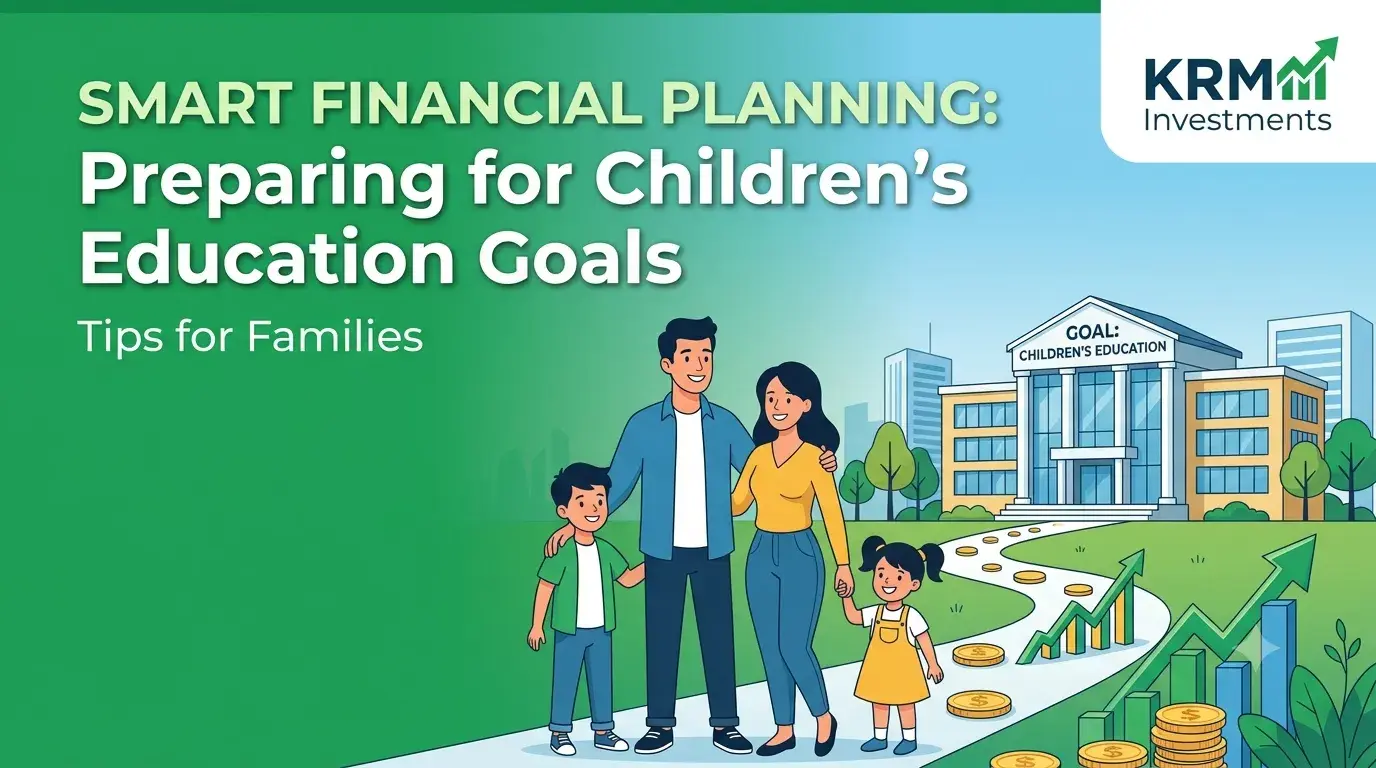
For most families, providing quality education for their children is one of the most important financial goals. Education not only shapes future opportunities but also represents a significant financial commitment that requires careful preparation. With education costs continuing to rise over time, families who start planning early often have greater flexibility and confidence when important academic milestones arrive.
At KRM Investments, established in 1997, we have worked with families across generations and observed a common pattern among successful planners. Parents who approach education funding through structured Financial Planning are generally better positioned to manage future expenses without disrupting other important financial goals.
Whether a family is planning for school education, higher studies in India, professional courses, or international education opportunities, early preparation can play a vital role. This article explores how families can prepare for children's education goals using disciplined investing, Goal-Based Investing, and long-term Investment Planning strategies.
Table of Contents
- Why Education Planning Matters
- Understanding Children's Education Goals
- Role of Financial Planning in Education Funding
- Role of SIP Investment for Education Goals
- Importance of Goal-Based Investing
- Common Mistakes Families Make
- How Families Should Approach Education Planning
- How KRM Investments Helps Families Plan
Why Education Planning Matters
Education costs have increased significantly over the years. Tuition fees, accommodation expenses, technology requirements, study materials, and specialized training programs can collectively create substantial financial commitments for families.
Many parents underestimate the future cost of education by focusing only on current expenses. However, when inflation and changing educational trends are considered, future requirements may be considerably higher.
This is why Financial Planning for children's education should begin as early as possible. Starting early allows families to spread the investment burden over a longer period while potentially benefiting from disciplined investing and compounding.
Education planning also helps families avoid financial stress during critical academic years when major expenses arise.
Understanding Children's Education Goals
Every family's education goals are unique. Some may prioritize private schooling, while others focus on funding higher education, professional certifications, or international study opportunities.
Before making investment decisions, families should clearly define their objectives.
Important considerations include:
- Expected education timeline
- Estimated future costs
- Desired institutions or programs
- Inflation assumptions
- Risk tolerance
- Other financial priorities
Defining these factors helps transform a general aspiration into a measurable financial goal. This forms the foundation of effective Goal-Based Investing and long-term Investment Planning.
Role of Financial Planning in Education Funding
Financial Planning provides a structured framework for preparing education funds without compromising other life goals.
A comprehensive Financial Planning process typically includes:
- Identifying future education expenses
- Calculating investment requirements
- Selecting suitable investment options
- Balancing risk and growth objectives
- Reviewing progress periodically
- Integrating education planning with broader family finances
Education funding should not be viewed in isolation. Families also need to consider emergency reserves, Retirement Planning, insurance requirements, Tax Saving Investments, and Wealth Management objectives.
By integrating education goals into a complete Financial Planning strategy, families can make informed decisions while maintaining financial stability.
Role of SIP Investment for Education Goals
SIP Investment is one of the most popular approaches used by families to build education funds gradually over time. Rather than waiting until educational expenses become imminent, families can begin investing systematically years in advance.
SIP Investment offers several advantages:
- Promotes disciplined investing habits
- Allows regular contributions regardless of market conditions
- Supports long-term accumulation goals
- Helps avoid large lump-sum funding pressures later
- Aligns well with Goal-Based Investing strategies
When education goals have a long investment horizon, regular investing can provide families with a structured path toward accumulating the required corpus.
Most importantly, SIP Investment encourages consistency, which is often one of the key factors in long-term financial success.
Importance of Goal-Based Investing
Goal-Based Investing helps families connect investments directly to their children's future educational needs.
Instead of investing without a defined purpose, families establish a specific objective and build an investment strategy around that goal.
Benefits of Goal-Based Investing include:
- Clear financial direction
- Improved investment discipline
- Better progress tracking
- Reduced emotional decision-making
- Alignment between investments and family priorities
When parents view investments as a means of supporting future educational opportunities, they are often more motivated to remain committed to long-term plans despite temporary market fluctuations.
Common Mistakes Families Make
Although most parents recognize the importance of education planning, several common mistakes can affect long-term outcomes.
- Starting planning too late
- Underestimating future education costs
- Ignoring inflation
- Investing without clear goals
- Frequent changes in investment strategy
- Neglecting periodic reviews
- Overlooking broader Financial Planning needs
Another common mistake is prioritizing short-term market movements over long-term educational objectives. Families may become distracted by temporary volatility and lose focus on their original goals.
A disciplined and structured approach can help reduce these challenges and improve preparedness over time.
How Families Should Approach Education Planning
Successful education planning typically begins with early preparation and long-term thinking.
Families should consider the following steps:
- Define education goals clearly.
- Estimate future funding requirements.
- Create a dedicated Financial Planning strategy.
- Use SIP Investment for disciplined contributions.
- Review plans periodically.
- Incorporate Goal-Based Investing principles.
- Balance education goals with Retirement Planning and other priorities.
- Maintain focus on Long-Term Wealth Creation.
Families that follow a structured process are often better equipped to adapt to changing circumstances while staying committed to educational objectives.
Education planning is not simply about funding future expenses; it is about creating opportunities and choices for the next generation.
How KRM Investments Helps Families Plan
Since 1997, KRM Investments has been helping families make informed financial decisions through personalized guidance and long-term planning strategies.
We understand that children's education is often one of the most important goals within a family's Financial Planning journey. Our approach focuses on understanding each family's objectives, timelines, and financial circumstances before recommending suitable strategies.
Our services include:
- Mutual Funds
- SIP Planning
- Financial Planning
- Goal-Based Investing
- Retirement Planning
- Tax Saving Investments
- Wealth Management
Through disciplined planning and ongoing guidance, we help families work toward important financial goals while maintaining focus on long-term financial well-being.
Important Note
Every investor has different financial goals, investment horizons and risk tolerance. Investment decisions should always be aligned with your overall Financial Planning strategy.
💡 Pro Tip
Investing consistently through SIPs and reviewing your portfolio annually generally produces better long-term outcomes than trying to time the market.