Table of Contents
Key Takeaways
- Build wealth through disciplined long-term investing.
- Diversification helps manage risk.
- SIP Investment encourages investing consistency.
- Financial Planning should align investments with life goals.
- Periodic portfolio reviews are essential.
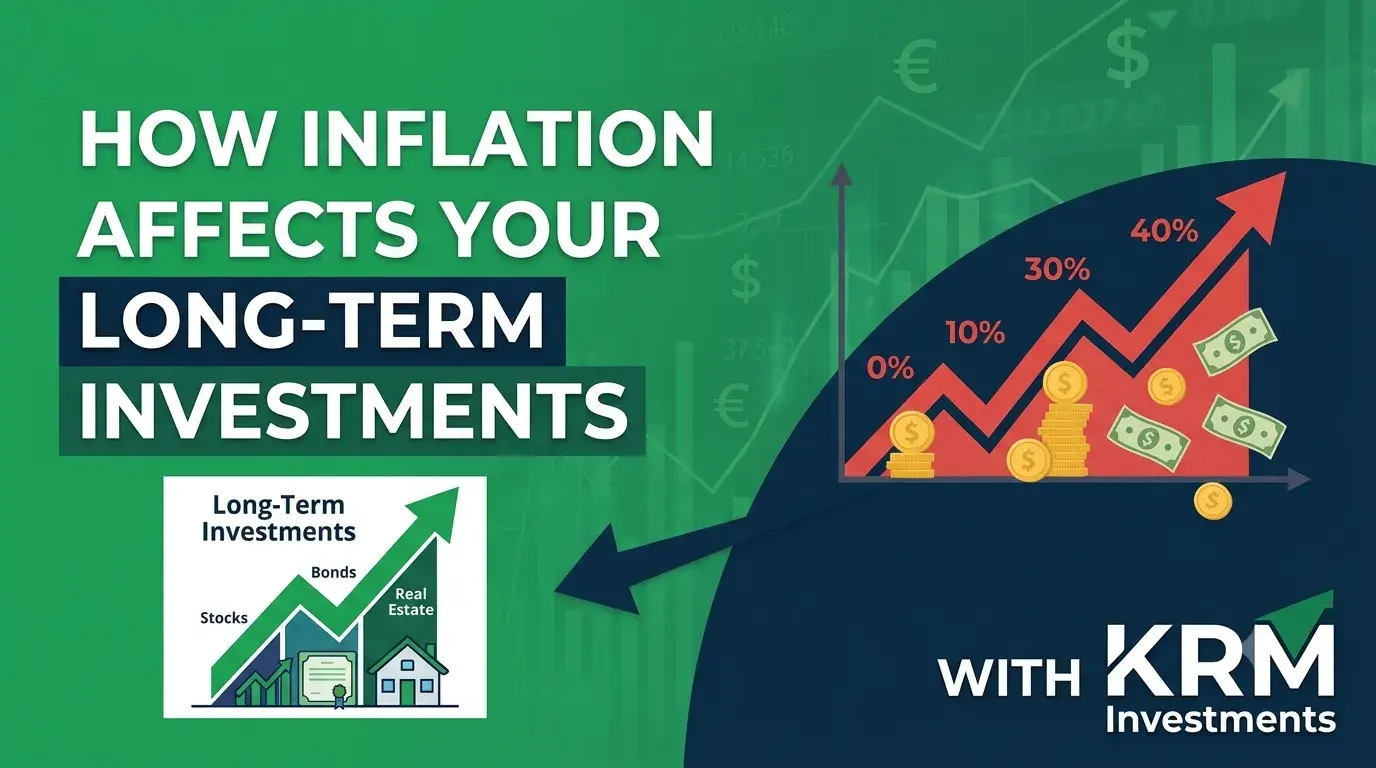
How Inflation Affects Your Long-Term Investments
Introduction
Inflation is one of the most important factors every investor should consider while planning for the future. Over time, the cost of goods and services generally increases, which reduces the purchasing power of money.
For investors, this means that simply saving money may not always be enough to achieve long-term financial goals. A proper investment strategy should consider inflation and focus on creating wealth that can support future needs.
At KRM Investments, established in 1997, we help investors understand how economic factors like inflation impact Financial Planning, Investment Planning, and Long-Term Wealth Creation.
This article explains how inflation affects investments and why investors need a disciplined approach to protect their future financial goals.
Table of Contents
- Understanding Inflation
- Why Inflation Matters for Investors
- Impact of Inflation on Savings
- Inflation and Long-Term Wealth Creation
- Role of SIP Investment
- Importance of Goal-Based Investing
- Common Inflation Planning Mistakes
- How KRM Investments Helps Investors
- FAQ Section
- Conclusion
- Call To Action
Understanding Inflation
Inflation refers to the increase in the prices of goods and services over time. As prices rise, the same amount of money buys fewer goods and services compared with the past.
For example, expenses that seem affordable today may become significantly higher after several years due to inflation.
This makes inflation an important consideration in every Financial Planning strategy.
Why Inflation Matters for Investors
Many investors focus only on investment returns without considering the impact of rising costs.
If investment growth does not keep pace with inflation, the real value of wealth may reduce over time.
Investors should consider:
- Future lifestyle expenses.
- Long-term financial goals.
- Retirement requirements.
- Healthcare costs.
Impact of Inflation on Savings
Traditional savings provide safety and liquidity, but investors should also understand how inflation affects purchasing power.
Money kept idle for long periods may lose value because future expenses may become higher.
A balanced approach combines financial security with suitable investment strategies.
Inflation and Long-Term Wealth Creation
Long-term wealth creation requires investments that are aligned with future financial objectives.
Investors need strategies that consider growth potential, risk, and inflation impact.
Proper Investment Planning helps investors create a roadmap that supports future needs.
Role of SIP Investment
SIP Investment can help investors build wealth gradually while staying disciplined over the long term.
Regular investing allows investors to create a structured approach toward their financial goals.
- Encourages consistent investing.
- Supports long-term wealth creation.
- Helps investors stay focused.
- Builds financial discipline.
Importance of Goal-Based Investing
Goal-Based Investing helps investors understand how inflation may affect different financial goals.
Whether planning for retirement, education, or wealth creation, investors should consider future costs while creating strategies.
Common Inflation Planning Mistakes
Investors should avoid these common mistakes:
- Ignoring inflation while setting goals.
- Depending only on savings.
- Not reviewing investment strategies.
- Focusing only on short-term returns.
How KRM Investments Helps Investors
KRM Investments helps investors create strategies through Mutual Funds, SIP Planning, Financial Planning, Goal-Based Investing, Retirement Planning, and Wealth Management solutions.
Our approach helps investors prepare for future financial needs and build confidence through disciplined investing.
Important Note
Every investor has different financial goals, investment horizons and risk tolerance. Investment decisions should always be aligned with your overall Financial Planning strategy.
💡 Pro Tip
Investing consistently through SIPs and reviewing your portfolio annually generally produces better long-term outcomes than trying to time the market.