Table of Contents
- Introduction
- Table of Contents
- What Is Inflation?
- Why Inflation Matters in Financial Planning
- How Inflation Impacts Long-Term Goals
- Role of Financial Planning in Managing Inflation
- How SIP Investment Helps Combat Inflation
- Common Investor Mistakes
- How Investors Should Approach Inflation
- How KRM Investments Helps Investors
Key Takeaways
- Build wealth through disciplined long-term investing.
- Diversification helps manage risk.
- SIP Investment encourages investing consistency.
- Financial Planning should align investments with life goals.
- Periodic portfolio reviews are essential.
How Inflation Impacts Long-Term Financial Goals
Introduction
Inflation is one of the most important yet often underestimated factors in Financial Planning. It refers to the gradual increase in the cost of goods and services over time, which reduces the purchasing power of money. While inflation may appear small in the short term, its long-term impact on financial goals can be significant.
For investors planning long-term objectives such as retirement, children’s education, or wealth creation, ignoring inflation can lead to underestimating future financial needs. This can result in insufficient savings and investment shortfalls later in life.
At KRM Investments, established in 1997, we have observed that successful investors consistently factor inflation into their Financial Planning strategies. This helps them stay better prepared for future financial requirements and maintain long-term financial stability.
This article explains how inflation impacts financial goals and how disciplined investing, SIP Investment, and Goal-Based Investing can help protect long-term wealth creation.
Table of Contents
- What Is Inflation?
- Why Inflation Matters in Financial Planning
- How Inflation Impacts Long-Term Goals
- Role of Financial Planning in Managing Inflation
- How SIP Investment Helps Combat Inflation
- Common Investor Mistakes
- How Investors Should Approach Inflation
- How KRM Investments Helps Investors
What Is Inflation?
Inflation refers to the gradual increase in prices over time, which reduces the purchasing power of money. This means that the same amount of money buys fewer goods and services in the future than it does today.
Inflation affects everyday expenses such as:
- Food and groceries
- Healthcare costs
- Education expenses
- Housing and rent
- Transportation
Even moderate inflation, when compounded over long periods, can significantly affect financial goals.
Why Inflation Matters in Financial Planning
Inflation plays a critical role in Financial Planning because it determines the future value of money needed to achieve financial goals.
Without considering inflation, investors may:
- Underestimate retirement corpus requirements
- Miscalculate education funding needs
- Set unrealistic savings targets
- Face financial shortfalls in the future
A proper Financial Planning strategy always accounts for inflation-adjusted future values.
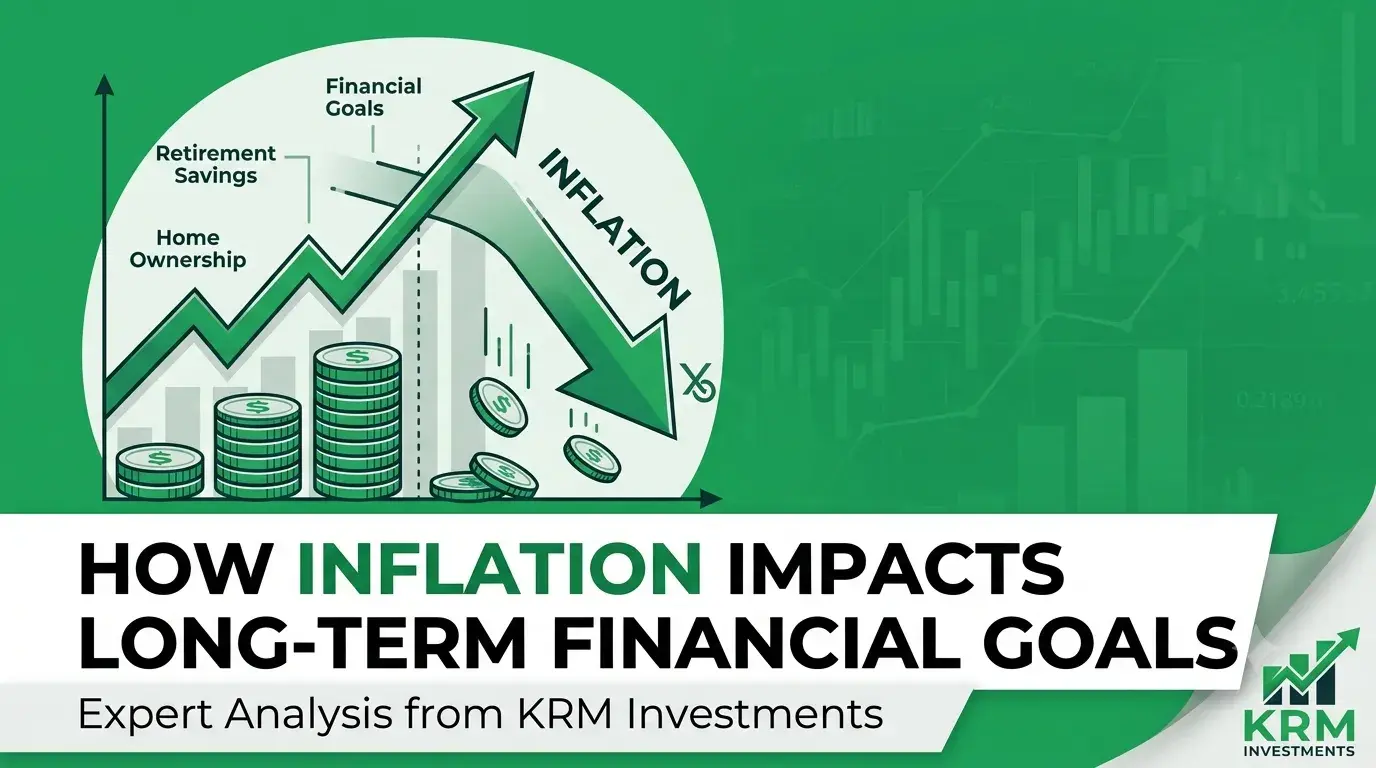
How Inflation Impacts Long-Term Goals
Long-term financial goals are particularly vulnerable to inflation because they span multiple years or decades.
Examples include:
- Retirement Planning
- Children’s education funding
- Home purchase planning
- Wealth accumulation goals
Over time, inflation increases the cost of achieving these goals, requiring higher investment contributions today.
For example, a retirement corpus that seems sufficient today may not provide the same lifestyle 20–30 years later due to rising living costs.
Role of Financial Planning in Managing Inflation
Financial Planning helps investors incorporate inflation into their long-term strategies.
A structured Financial Planning approach helps:
- Estimate future financial needs realistically
- Adjust investment targets over time
- Align goals with inflation expectations
- Support Long-Term Wealth Creation
Without structured planning, investors risk falling short of their financial objectives.
How SIP Investment Helps Combat Inflation
SIP Investment is an effective way to manage the long-term impact of inflation.
By investing regularly in Mutual Funds, investors can potentially participate in market-linked growth over time.
Benefits include:
- Disciplined investing approach
- Long-term wealth accumulation
- Rupee cost averaging
- Support for Goal-Based Investing
SIP Investment helps investors stay consistent, which is essential for overcoming inflation’s long-term effects.
Common Investor Mistakes
Many investors underestimate inflation when planning financial goals.
- Ignoring inflation in retirement planning
- Using fixed, outdated financial assumptions
- Not increasing investments over time
- Over-reliance on low-growth savings instruments
- Delaying investment decisions
These mistakes can significantly impact long-term financial outcomes.
How Investors Should Approach Inflation
- Always factor inflation into Financial Planning.
- Set realistic long-term financial goals.
- Use SIP Investment for disciplined investing.
- Review financial plans periodically.
- Focus on Goal-Based Investing strategies.
- Maintain diversified portfolios.
- Increase investments as income grows.
- Stay committed to Long-Term Wealth Creation.
Inflation is silent, but its impact is powerful. Proper planning today helps protect financial goals for tomorrow.
How KRM Investments Helps Investors
Since 1997, KRM Investments has helped investors build inflation-aware financial strategies through disciplined Financial Planning and long-term investment guidance.
Our approach focuses on helping investors understand real future value requirements and align their investments accordingly.
Our services include:
- Mutual Funds
- SIP Planning
- Financial Planning
- Goal-Based Investing
- Retirement Planning
- Tax Saving Investments
- Wealth Management
We help investors build structured strategies designed to protect purchasing power and support Long-Term Wealth Creation.
Important Note
Every investor has different financial goals, investment horizons and risk tolerance. Investment decisions should always be aligned with your overall Financial Planning strategy.
💡 Pro Tip
Investing consistently through SIPs and reviewing your portfolio annually generally produces better long-term outcomes than trying to time the market.