Table of Contents
- Why Some Investors Stayed Invested
- Importance of SIP Investment During Market Corrections
- Lessons Learned From Investor Behaviour
- How KRM Investments Supported Investors
- FAQ Section
- Conclusion
- Call To Action
- Introduction
- Table of Contents
- Understanding the COVID-19 Market Crash
- How Investors Reacted During the Crisis
- The Role of Financial Planning During Market Falls
Key Takeaways
- Build wealth through disciplined long-term investing.
- Diversification helps manage risk.
- SIP Investment encourages investing consistency.
- Financial Planning should align investments with life goals.
- Periodic portfolio reviews are essential.
Why Some Investors Stayed Invested
One of the biggest lessons from the COVID-19 market crash was the importance of having a long-term mindset. Investors who remained invested understood that market declines are part of the investment journey.
These investors focused on their original financial objectives instead of reacting to short-term market movements. Their approach was based on patience, discipline, and trust in their investment strategy.
Many long-term investors continued their SIP Investment contributions because they understood that regular investing helps maintain consistency across different market conditions.
Successful investors focus on their goals, not temporary market noise.
Market corrections can test investor confidence, but they can also highlight the importance of proper planning and professional guidance.
Importance of SIP Investment During Market Corrections
SIP Investment became an important discussion point during the market crash because it represents disciplined investing. Instead of trying to predict market movements, investors continue investing regularly over time.
During market declines, SIP investors may accumulate more units because investment amounts purchase more units when prices are lower. Over a longer period, this disciplined approach can support wealth creation.
However, SIP is not about avoiding market risk. It is about creating a systematic investment habit that aligns with long-term goals.
- Helps investors stay consistent.
- Reduces emotional investment decisions.
- Supports long-term financial goals.
- Encourages disciplined wealth creation.
Lessons Learned From Investor Behaviour
The COVID-19 market crash provided several important lessons for investors.
Lesson 1: Emotions Influence Investment Decisions
Fear during market declines can lead investors to make decisions that may not support their long-term objectives. Understanding emotional behaviour is an important part of successful investing.
Lesson 2: Planning Creates Confidence
Investors with a clear Financial Planning strategy were generally more comfortable during uncertainty because they understood their investment purpose.
Lesson 3: Time Matters in Investing
Short-term market movements are difficult to predict, but long-term investing focuses on business growth, economic recovery, and financial goals.
Lesson 4: Professional Guidance Helps
A trusted Financial Advisor India can help investors review their plans and make informed decisions during challenging periods.
How KRM Investments Supported Investors
During uncertain market conditions, KRM Investments focused on helping investors stay informed and connected with their financial objectives.
Our approach has always been based on understanding investor goals, creating suitable strategies, and providing guidance through different market cycles.
Through Mutual Funds, SIP Planning, Goal-Based Investing, Retirement Planning, and Wealth Management solutions, we help investors build strategies designed for long-term success.
Market uncertainty can create questions, but with proper guidance, investors can approach challenges with greater confidence.
FAQ Section
1. What happened to markets during the COVID-19 crash?
Markets experienced a sharp decline due to global uncertainty and economic concerns caused by the pandemic.
2. Should investors sell during market crashes?
Investment decisions should depend on financial goals and strategy rather than fear or short-term market movements.
3. Did SIP investors benefit during market recovery?
SIP investors who stayed disciplined continued investing through different market conditions and benefited from long-term market participation.
4. How does Financial Planning help during crises?
Financial Planning provides a roadmap that helps investors stay focused on their objectives.
5. Are market crashes normal?
Yes, market corrections are a normal part of investing and have occurred throughout market history.
6. What should investors do during uncertainty?
Investors should review their goals, avoid emotional decisions, and follow their planned strategy.
7. Why is a Financial Advisor India useful?
A financial advisor provides guidance and helps investors make informed decisions during changing market conditions.
8. What is the biggest lesson from COVID-19 market volatility?
The biggest lesson is that discipline, patience, and proper planning are essential for long-term wealth creation.
Conclusion
The COVID-19 market crash was a challenging period for investors, but it also highlighted important principles of successful investing.
Investors who focused on Financial Planning, continued disciplined investing, and avoided emotional decisions were better prepared for recovery.
Market uncertainty will always exist, but a strong investment strategy helps investors remain focused on their long-term goals.
KRM Investments continues to support investors by providing trusted guidance and personalized financial solutions designed for long-term wealth creation.
Call To Action
If you want to build an investment strategy that can handle changing market conditions, connect with KRM Investments today.
Let KRM Investments help you create a disciplined financial plan focused on your goals, confidence, and future wealth.
How Investors Reacted During the COVID-19 Market Crash
Introduction
The year 2020 brought an unexpected challenge for investors across the world. The COVID-19 pandemic created uncertainty across economies, businesses, and financial markets. Global markets experienced sharp declines, and many investors faced fear and confusion about their investments.
During such periods, investor behaviour becomes one of the most important factors affecting long-term financial outcomes. Some investors reacted emotionally and exited investments during market declines, while others stayed focused on their financial plans and long-term goals.
At KRM Investments, we observed that the investors who had a clear Financial Planning strategy were better prepared to handle uncertainty. They understood that market movements are temporary, while long-term goals require patience and discipline.
This article shares important lessons from the COVID-19 market crash and explains how investors can approach similar uncertain situations in the future.
Table of Contents
- Understanding the COVID-19 Market Crash
- How Investors Reacted During the Crisis
- The Role of Financial Planning During Market Falls
- Why Some Investors Stayed Invested
- Importance of SIP Investment During Market Corrections
- Lessons Learned From Investor Behaviour
- How KRM Investments Supported Investors
- FAQ Section
- Conclusion
- Call To Action
Understanding the COVID-19 Market Crash
The COVID-19 pandemic created one of the fastest market declines in recent history. Businesses faced uncertainty, economic activity slowed, and investors became concerned about the future.
Market declines can create strong emotional reactions because investors see the value of their investments reducing in the short term. However, market corrections are a natural part of investing.
Experienced investors understand that markets move in cycles. Growth periods are often followed by corrections, and recovery periods can create new opportunities.
The biggest challenge during a market fall is not always the market itself but how investors respond to it.
How Investors Reacted During the Crisis
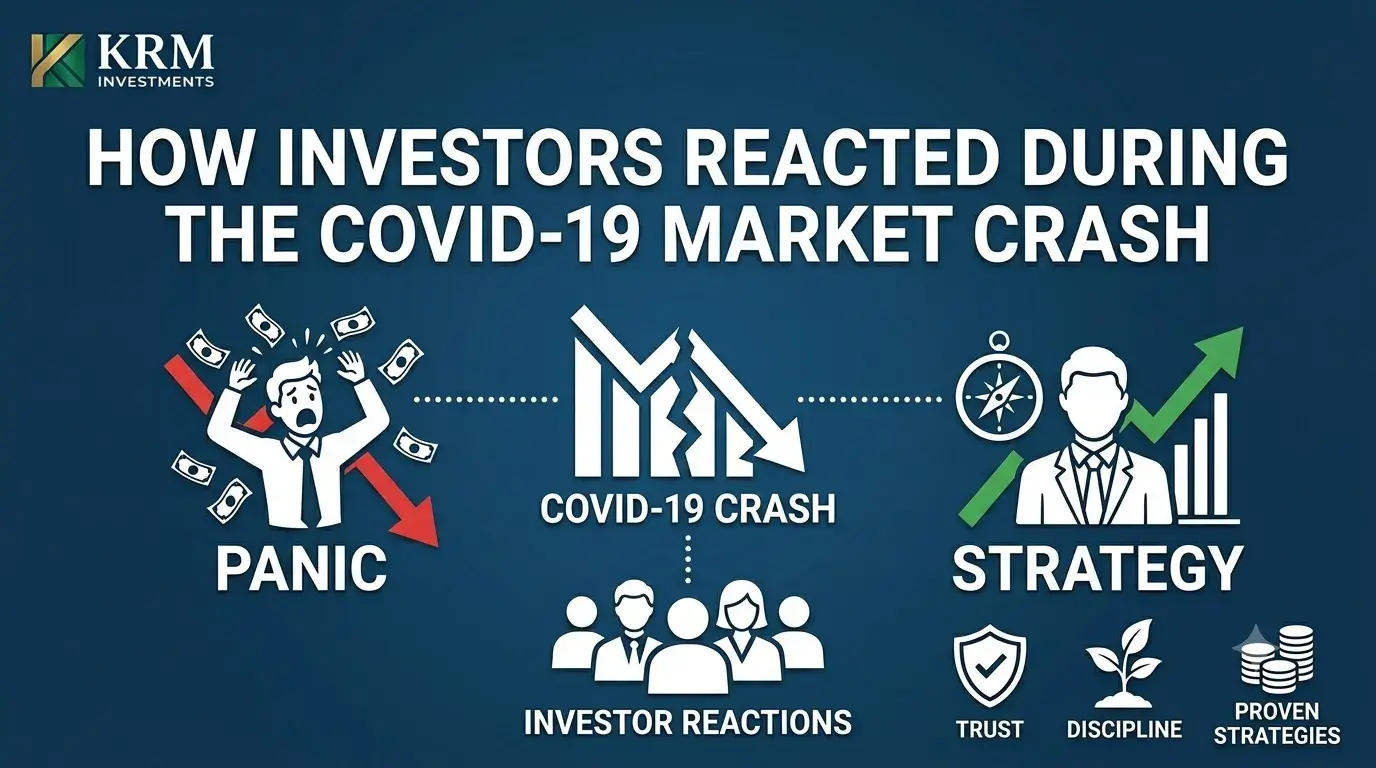
During the COVID-19 market crash, investors displayed different behaviours based on their understanding, experience, and financial preparation.
Some Investors Reacted With Fear
Many investors became worried after seeing their portfolio values decline. Some considered stopping investments or withdrawing money because of uncertainty.
This reaction is understandable because financial markets are directly connected with emotions. However, making decisions only based on fear can affect long-term wealth creation.
Some Investors Stayed Disciplined
Investors who had proper Financial Planning often remained focused on their original strategy. They understood that their investments were created for long-term goals, not short-term market movements.
Many continued their SIP Investment plans and allowed their strategy to work through the market cycle.
The Role of Financial Planning During Market Falls
A strong financial plan provides direction during uncertain periods. When investors have clearly defined goals, they are less likely to make emotional decisions.
Financial Planning helps investors understand:
- Why they are investing.
- How long they need to stay invested.
- How much risk they can handle.
- What strategy matches their goals.
Without a plan, market declines may create panic. With a plan, investors can evaluate situations logically.
Important Note
Every investor has different financial goals, investment horizons and risk tolerance. Investment decisions should always be aligned with your overall Financial Planning strategy.
💡 Pro Tip
Investing consistently through SIPs and reviewing your portfolio annually generally produces better long-term outcomes than trying to time the market.