Table of Contents
- Introduction
- Table of Contents
- Why Emergency Funds Matter
- What Is an Emergency Fund?
- How Much Emergency Fund Should You Maintain?
- Role of Financial Planning
- How Emergency Funds Support SIP Investment
- Importance of Goal-Based Investing
- Common Emergency Fund Mistakes
- How Investors Should Build Emergency Savings
Key Takeaways
- Build wealth through disciplined long-term investing.
- Diversification helps manage risk.
- SIP Investment encourages investing consistency.
- Financial Planning should align investments with life goals.
- Periodic portfolio reviews are essential.
How Much Emergency Fund Should I Maintain?
Introduction
Many investors focus on building wealth through Mutual Funds, SIP Investment, Retirement Planning, and long-term investing. While these goals are important, one of the most fundamental components of Financial Planning is often overlooked: maintaining an adequate emergency fund.
An emergency fund acts as a financial safety net during unexpected situations such as job loss, medical expenses, urgent home repairs, family emergencies, or temporary income disruptions. Without sufficient emergency savings, investors may be forced to withdraw long-term investments at unfavorable times, potentially disrupting carefully designed financial plans.
KRM Investments, established in 1997, has helped investors navigate both financial opportunities and unforeseen challenges. One lesson that consistently emerges is that financial stability begins with preparation. Investors who maintain appropriate emergency reserves are often better positioned to stay disciplined with their long-term investment strategies during periods of uncertainty.
An emergency fund is not designed to generate high returns. Its primary purpose is to provide liquidity, flexibility, and peace of mind. By creating a financial buffer, investors can separate short-term emergencies from long-term wealth creation goals.
In this article, we explore how much emergency savings investors should consider maintaining, why emergency funds are important, and how they fit into broader Financial Planning and Wealth Management strategies.
Table of Contents
- Why Emergency Funds Matter
- What Is an Emergency Fund?
- How Much Emergency Fund Should You Maintain?
- Role of Financial Planning
- How Emergency Funds Support SIP Investment
- Importance of Goal-Based Investing
- Common Emergency Fund Mistakes
- How Investors Should Build Emergency Savings
Why Emergency Funds Matter
Life is unpredictable. Even the most carefully designed financial plans can be affected by unexpected events. An emergency fund provides financial resilience by helping investors manage short-term challenges without disrupting long-term objectives.
Without emergency savings, investors may be forced to rely on credit cards, personal loans, or premature liquidation of investments. Such actions can create additional financial stress and potentially affect long-term goals.
Emergency funds also help reduce emotional pressure during difficult periods. Knowing that essential expenses can be covered for a period of time often allows investors to make more rational financial decisions.
From a Financial Planning perspective, emergency reserves create a strong foundation upon which other investment strategies can be built. They support financial stability and help investors remain committed to long-term plans.
In many cases, a strong emergency fund becomes the first line of defense against financial uncertainty.
What Is an Emergency Fund?
An emergency fund is money set aside specifically for unexpected expenses or temporary income interruptions. These funds should remain easily accessible and separate from long-term investment portfolios.
The purpose of an emergency fund is not to finance vacations, discretionary purchases, or planned expenses. Instead, it is intended for genuine financial emergencies that require immediate attention.
Examples of situations where emergency savings may be useful include:
- Unexpected medical expenses.
- Temporary job loss or income reduction.
- Major home repairs.
- Urgent vehicle expenses.
- Family emergencies.
- Unexpected travel requirements.
- Business cash flow disruptions.
Having dedicated emergency savings allows investors to address these situations without disturbing investments intended for future goals.
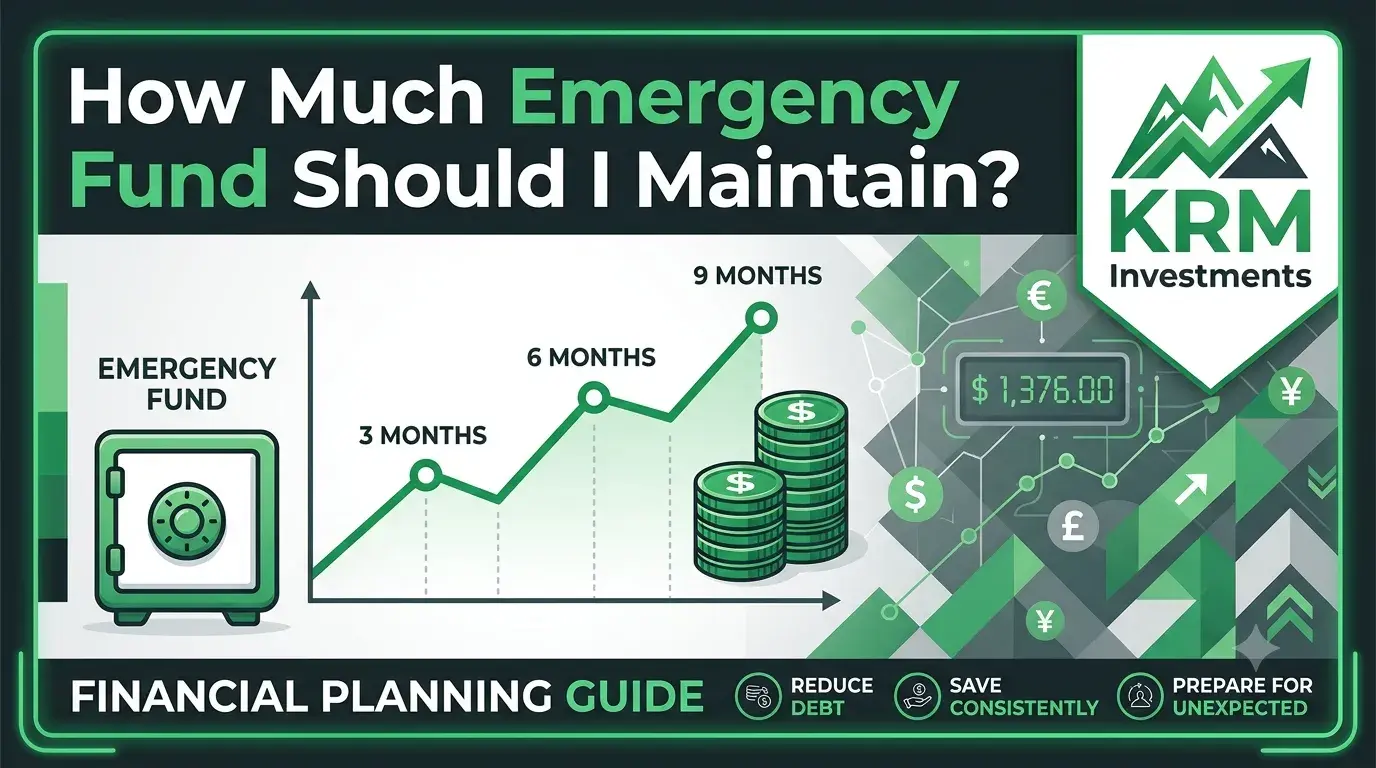
How Much Emergency Fund Should You Maintain?
There is no single emergency fund amount that applies to every investor. The appropriate size depends on personal circumstances, financial responsibilities, income stability, and lifestyle requirements.
A commonly discussed guideline is maintaining savings equivalent to several months of essential living expenses. However, the exact amount should reflect individual needs rather than a universal formula.
Factors that may influence emergency fund requirements include:
- Number of dependents.
- Employment stability.
- Nature of income sources.
- Monthly household expenses.
- Existing financial obligations.
- Healthcare considerations.
- Business ownership responsibilities.
- Debt commitments.
For example, individuals with highly variable income may choose to maintain larger emergency reserves than those with stable salaried income. Similarly, families with greater financial responsibilities may require larger safety cushions.
The objective is not to accumulate excessive idle cash but to maintain sufficient liquidity to handle unexpected situations confidently.
Role of Financial Planning
Financial Planning helps determine appropriate emergency fund requirements within the context of broader financial goals. Rather than viewing emergency savings as separate from investment planning, investors should treat them as an essential component of an overall financial strategy.
A structured Financial Planning process helps identify monthly expenses, estimate future obligations, assess risks, and determine suitable emergency reserve levels.
Emergency funds often serve as the foundation upon which other financial goals are built. Before aggressively pursuing Long-Term Wealth Creation objectives, investors may benefit from ensuring adequate short-term financial protection.
Financial Planning also helps balance liquidity needs with investment opportunities. Excessive cash holdings may reduce long-term growth potential, while insufficient emergency savings may increase financial vulnerability.
By integrating emergency reserves into comprehensive planning, investors can achieve greater financial stability and confidence.
How Emergency Funds Support SIP Investment
SIP Investment works best when investors remain consistent regardless of short-term market conditions. Emergency funds can support this consistency by providing a financial buffer during challenging periods.
Without emergency savings, investors may feel compelled to stop SIP contributions or redeem Mutual Fund investments when unexpected expenses arise. This can disrupt long-term investment plans and affect progress toward financial goals.
When adequate emergency reserves are available, investors often find it easier to continue disciplined investing despite temporary financial challenges.
Emergency funds also reduce the likelihood of making emotionally driven investment decisions. Investors can address immediate financial needs without disturbing portfolios designed for future objectives.
As a result, emergency savings and SIP Investment frequently work together as complementary components of effective Financial Planning.
Importance of Goal-Based Investing
Goal-Based Investing encourages investors to allocate resources according to specific financial objectives. Emergency funds play an important role within this framework because they address a distinct financial need: short-term protection.
By separating emergency savings from long-term goals, investors gain greater clarity regarding how resources should be allocated and managed.
Different financial goals often require different strategies. Retirement Planning, children's education, wealth accumulation, and emergency preparedness each serve unique purposes and should be planned accordingly.
Goal-Based Investing helps investors avoid mixing short-term liquidity needs with long-term investment objectives. This separation can improve financial discipline and decision-making.
A clear structure often leads to greater confidence and stronger commitment to long-term financial plans.
Common Emergency Fund Mistakes
Many investors underestimate the importance of emergency savings or make mistakes that reduce their effectiveness.
- Not maintaining any emergency fund.
- Using emergency savings for non-essential purchases.
- Keeping insufficient reserves relative to financial obligations.
- Investing emergency funds in highly volatile assets.
- Failing to review emergency fund requirements periodically.
- Relying solely on credit during emergencies.
- Mixing emergency savings with long-term investment portfolios.
- Ignoring changes in family or income circumstances.
Recognizing these mistakes can help investors build stronger financial foundations and improve resilience during unexpected events.
How Investors Should Build Emergency Savings
Building an emergency fund is often a gradual process. Investors do not necessarily need to accumulate the entire amount immediately. Instead, they can create a structured savings plan and contribute consistently over time.
Establishing automatic transfers, prioritizing savings goals, and reviewing financial needs periodically can help maintain progress. Investors should also reassess emergency fund requirements whenever major life changes occur.
Emergency savings should remain accessible, liquid, and dedicated to genuine emergencies. The objective is not maximizing returns but ensuring financial readiness.
Once adequate emergency reserves are established, investors can focus more confidently on Investment Planning, Mutual Funds, SIP Investment, Retirement Planning, Tax Saving Investments, and Long-Term Wealth Creation strategies.
An emergency fund may not be the most exciting aspect of Financial Planning, but it is often one of the most important. By maintaining appropriate emergency reserves, investors create a foundation of stability that supports disciplined investing, Goal-Based Investing, Wealth Management, and long-term financial success. In many cases, the confidence provided by an emergency fund becomes one of the most valuable assets an investor can possess.
Important Note
Every investor has different financial goals, investment horizons and risk tolerance. Investment decisions should always be aligned with your overall Financial Planning strategy.
💡 Pro Tip
Investing consistently through SIPs and reviewing your portfolio annually generally produces better long-term outcomes than trying to time the market.