Table of Contents
- Introduction
- Table of Contents
- What Is an Emergency Fund?
- Why Emergency Funds Matter Before Investing
- How Much Emergency Fund Should You Maintain?
- Emergency Fund and SIP Investment
- Balancing Safety and Wealth Creation
- Common Emergency Fund Mistakes
- Role of Financial Planning
- How KRM Investments Helps Investors
Key Takeaways
- Build wealth through disciplined long-term investing.
- Diversification helps manage risk.
- SIP Investment encourages investing consistency.
- Financial Planning should align investments with life goals.
- Periodic portfolio reviews are essential.
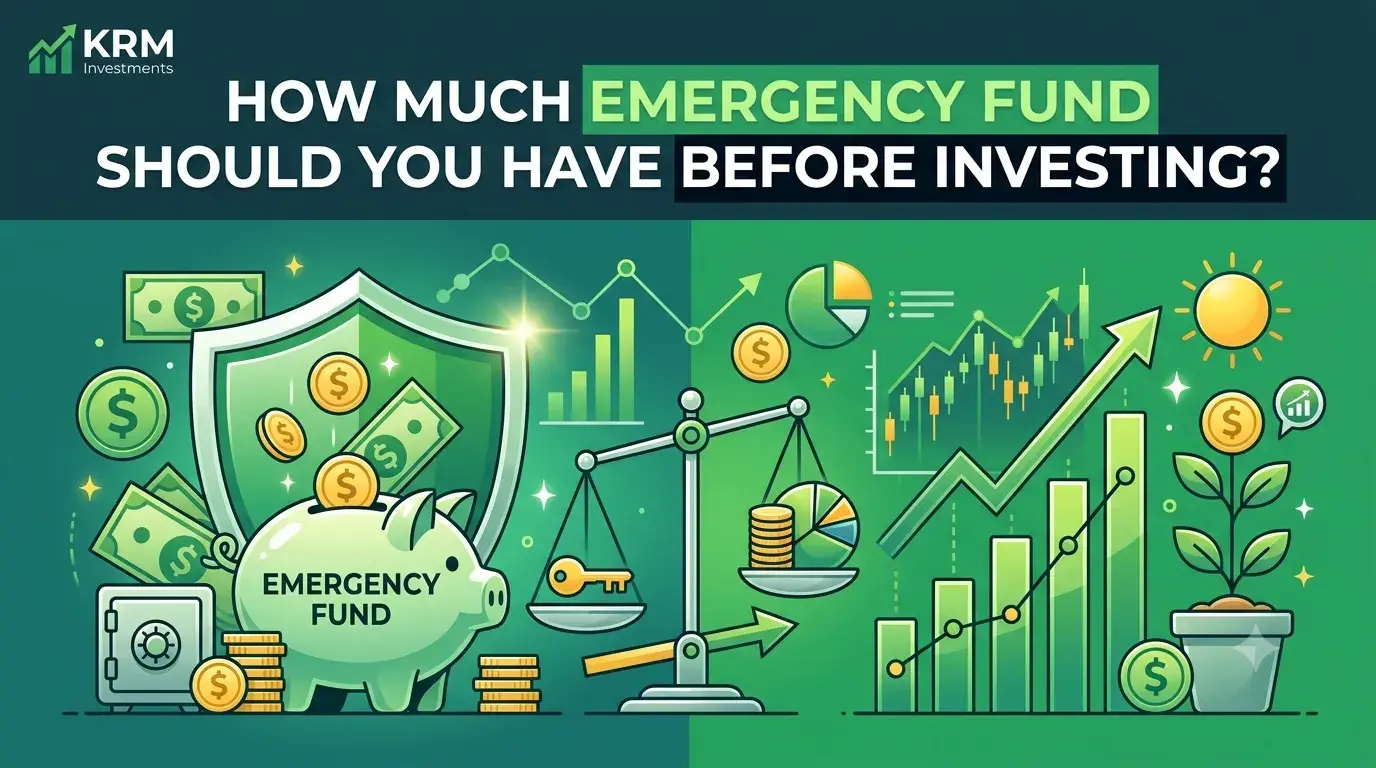
How Much Emergency Fund Should You Have Before Investing?
Introduction
Investing is an important step toward building wealth, but a strong financial foundation begins with financial security. Before focusing completely on investments, investors should ensure they are prepared for unexpected financial situations.
An emergency fund acts as a safety net that helps manage unexpected expenses such as medical emergencies, job changes, urgent repairs, or other unforeseen needs without disturbing long-term investments.
At KRM Investments, established in 1997, we believe that successful Financial Planning includes both protection and growth. A balanced approach helps investors create stability while continuing their journey toward Long-Term Wealth Creation.
This article explains the importance of an emergency fund, how much you should maintain, and how it fits into your overall Investment Planning strategy.
Table of Contents
- What Is an Emergency Fund?
- Why Emergency Funds Matter Before Investing
- How Much Emergency Fund Should You Maintain?
- Emergency Fund and SIP Investment
- Balancing Safety and Wealth Creation
- Common Emergency Fund Mistakes
- Role of Financial Planning
- How KRM Investments Helps Investors
- FAQ Section
- Conclusion
- Call To Action
What Is an Emergency Fund?
An emergency fund is money kept aside specifically for unexpected financial needs. It provides liquidity and allows investors to handle emergencies without depending on loans or disturbing long-term investments.
The purpose of an emergency fund is not maximum returns. Its purpose is financial stability and quick accessibility when required.
Why Emergency Funds Matter Before Investing
Many investors focus only on growing wealth but overlook financial protection. Without an emergency fund, unexpected expenses may force investors to withdraw investments at the wrong time.
A proper emergency fund helps investors:
- Continue investments during difficult situations.
- Avoid unnecessary debt.
- Protect long-term financial goals.
- Maintain peace of mind.
How Much Emergency Fund Should You Maintain?
The ideal emergency fund depends on personal circumstances, income stability, responsibilities, and lifestyle.
Many investors consider maintaining several months of essential expenses as a practical approach.
Factors that influence emergency fund requirements include:
- Monthly household expenses.
- Job stability.
- Family responsibilities.
- Existing financial commitments.
Emergency Fund and SIP Investment
SIP Investment is designed for long-term wealth creation, while an emergency fund is designed for short-term financial protection.
Both serve different purposes in a complete Financial Planning strategy.
Having emergency savings allows investors to continue SIP investments without interruption during unexpected situations.
Balancing Safety and Wealth Creation
Successful financial management requires balancing protection and growth.
An emergency fund provides stability, while investments such as Mutual Funds and SIPs support long-term wealth creation.
Investors should avoid using long-term investments for short-term emergencies whenever possible.
Common Emergency Fund Mistakes
Investors should avoid these common mistakes:
- Not creating an emergency fund.
- Keeping insufficient reserves.
- Investing emergency money in risky options.
- Using emergency savings for unnecessary expenses.
Role of Financial Planning
Financial Planning helps investors create a complete strategy that includes emergency preparation, investments, retirement planning, and future goals.
A structured plan helps investors manage both present needs and future aspirations.
How KRM Investments Helps Investors
KRM Investments helps investors create balanced financial strategies through Mutual Funds, SIP Planning, Financial Planning, Goal-Based Investing, Retirement Planning, and Wealth Management solutions.
Our goal is to help investors build strong financial foundations and work confidently toward their long-term objectives.
Important Note
Every investor has different financial goals, investment horizons and risk tolerance. Investment decisions should always be aligned with your overall Financial Planning strategy.
💡 Pro Tip
Investing consistently through SIPs and reviewing your portfolio annually generally produces better long-term outcomes than trying to time the market.