Table of Contents
- Introduction
- Table of Contents
- What Is Panic Selling?
- Why Investors Panic
- How Panic Selling Impacts Wealth Creation
- The Importance of Long-Term Thinking
- Role of Financial Planning
- How SIP Investment Encourages Discipline
- Common Emotional Investing Mistakes
- How Investors Should Respond During Market Volatility
- How KRM Investments Helps Investors
Key Takeaways
- Build wealth through disciplined long-term investing.
- Diversification helps manage risk.
- SIP Investment encourages investing consistency.
- Financial Planning should align investments with life goals.
- Periodic portfolio reviews are essential.
How Panic Selling Destroyed Wealth for Some Investors
Introduction
Financial markets naturally experience periods of uncertainty, volatility, and market corrections. While these phases can be uncomfortable, they are a normal part of long-term investing. Unfortunately, some investors respond to market declines by making emotional decisions that can negatively affect their financial futures.
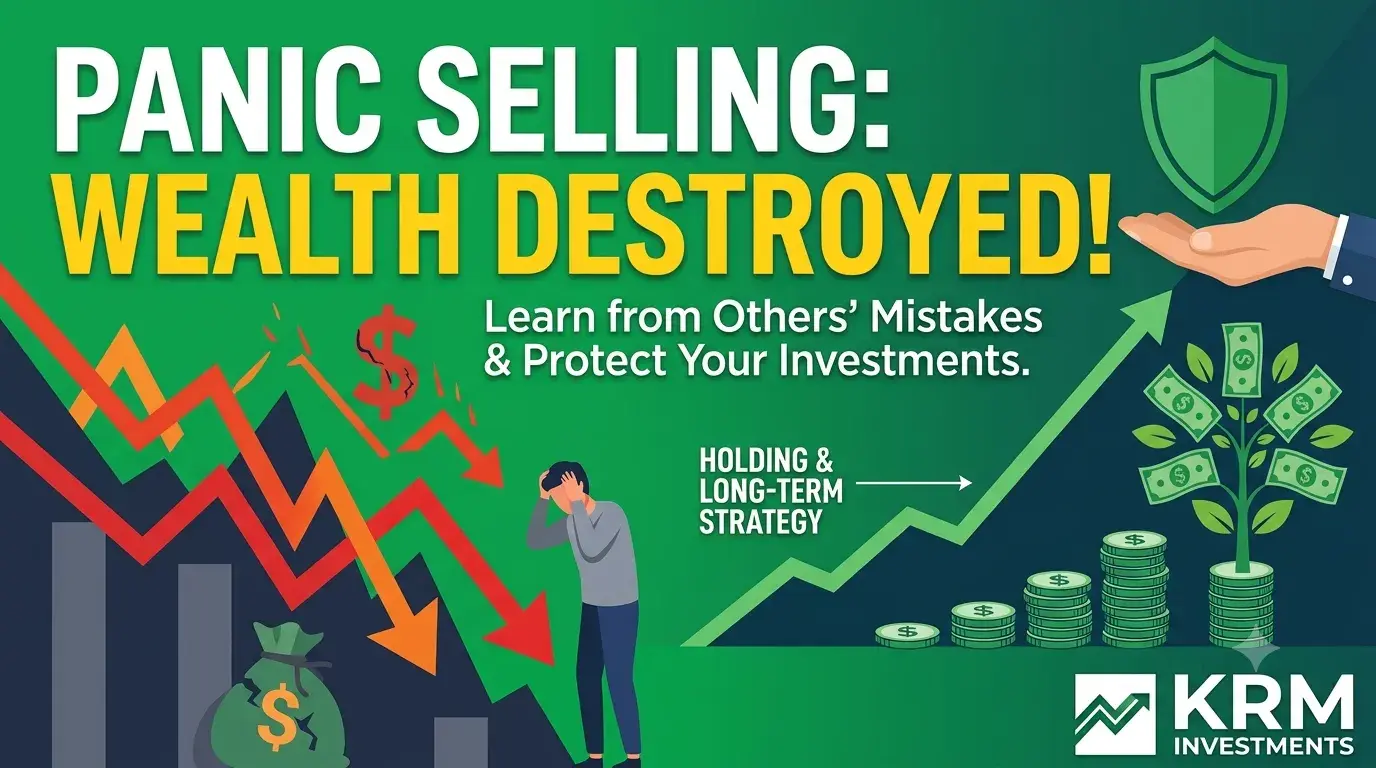
One of the most common and costly investor mistakes is panic selling. During periods of fear, uncertainty, or negative market sentiment, investors sometimes sell their investments abruptly in an attempt to avoid further losses. While this may provide temporary emotional relief, it can also interrupt long-term wealth creation and make achieving financial goals more difficult.
At KRM Investments, established in 1997, we have observed multiple market cycles and investor reactions over the years. A recurring lesson is that market volatility itself is often less damaging than the emotional decisions investors make in response to it.
This article explores how panic selling can affect long-term investment outcomes and explains how disciplined Financial Planning, Goal-Based Investing, and SIP Investment can help investors navigate uncertain periods more effectively.
Table of Contents
- What Is Panic Selling?
- Why Investors Panic
- How Panic Selling Impacts Wealth Creation
- The Importance of Long-Term Thinking
- Role of Financial Planning
- How SIP Investment Encourages Discipline
- Common Emotional Investing Mistakes
- How Investors Should Respond During Market Volatility
- How KRM Investments Helps Investors
What Is Panic Selling?
Panic selling occurs when investors sell investments primarily because of fear rather than because of changes in their long-term financial objectives.
This behavior is often triggered by:
- Sharp market declines
- Economic uncertainty
- Negative news coverage
- Global financial events
- Short-term portfolio losses
When emotions dominate decision-making, investors may abandon carefully developed investment strategies and long-term plans.
Panic selling is usually driven by the desire to avoid further discomfort rather than by a disciplined evaluation of financial goals.
Why Investors Panic
Human psychology plays a significant role in investing. Investors naturally feel concerned when portfolio values decline, especially during periods of widespread uncertainty.
Several factors contribute to panic selling:
- Fear of additional losses
- Short-term focus
- Constant exposure to market news
- Lack of a structured Financial Planning strategy
- Unclear investment objectives
Without a clear framework for decision-making, market volatility can feel overwhelming and may encourage reactive behavior.
Understanding these emotional influences is an important step toward becoming a more disciplined investor.
How Panic Selling Impacts Wealth Creation
One of the biggest risks associated with panic selling is that investors may permanently disconnect from their long-term investment plans.
Potential consequences include:
- Interrupting Long-Term Wealth Creation
- Missing future market recoveries
- Delaying financial goals
- Reducing portfolio growth potential
- Increasing emotional decision-making patterns
While market declines are often temporary, decisions made during periods of fear can have lasting effects on financial outcomes.
Investors who repeatedly react to short-term volatility may find it difficult to achieve long-term objectives consistently.
The Importance of Long-Term Thinking
Successful investing typically requires a long-term perspective.
Financial markets have historically experienced periods of growth, correction, recovery, and uncertainty. Investors who understand this reality are often better prepared to navigate temporary market disruptions.
Long-term thinking helps investors:
- Stay focused on goals
- Reduce emotional reactions
- Maintain investment discipline
- Support Goal-Based Investing strategies
- Improve consistency in decision-making
The objective is not to avoid every market decline but to remain committed to long-term financial goals despite short-term challenges.
Role of Financial Planning
Financial Planning provides investors with structure during uncertain periods.
A comprehensive Financial Planning strategy helps investors:
- Define clear objectives
- Understand investment timelines
- Maintain diversification
- Prepare for Retirement Planning
- Support Goal-Based Investing
- Manage investment-related uncertainty
When investors have a clear plan, they are often less likely to make emotionally driven decisions during market volatility.
Financial Planning serves as a reminder that short-term market movements should be viewed within the context of long-term goals.
How SIP Investment Encourages Discipline
SIP Investment is often valued because it promotes consistency and discipline.
During periods of market volatility, some investors may feel tempted to stop investing. However, disciplined SIP Investment strategies help investors remain focused on long-term objectives.
Benefits of SIP Investment include:
- Regular investing habits
- Reduced emotional decision-making
- Support for Goal-Based Investing
- Long-term financial discipline
- Structured wealth accumulation
Rather than reacting to every market event, SIP Investment encourages investors to maintain a systematic approach.
Common Emotional Investing Mistakes
Panic selling is often part of a broader pattern of emotional investing behavior.
- Selling during market declines
- Stopping SIP Investment contributions
- Attempting to predict market movements
- Following crowd behavior
- Ignoring Financial Planning objectives
- Making decisions based on headlines
These behaviors can distract investors from long-term goals and increase the likelihood of inconsistent investment outcomes.
Successful investing often requires managing emotions as carefully as managing investments.
How Investors Should Respond During Market Volatility
Periods of uncertainty require discipline, patience, and perspective.
- Review long-term financial goals.
- Follow a structured Financial Planning strategy.
- Maintain diversified investments.
- Continue SIP Investment plans where appropriate.
- Focus on Goal-Based Investing objectives.
- Avoid reacting to short-term headlines.
- Review portfolios periodically.
- Stay committed to Long-Term Wealth Creation.
Investors who maintain discipline during difficult periods often place themselves in a stronger position to pursue future financial opportunities.
Market volatility may be temporary, but decisions made during moments of panic can influence financial outcomes for years. Discipline often proves more valuable than prediction.
How KRM Investments Helps Investors
Since 1997, KRM Investments has helped investors navigate market uncertainty through disciplined Financial Planning and long-term investment guidance.
Our focus is on helping investors stay aligned with their goals, avoid emotional decision-making, and build sustainable wealth through thoughtful Investment Planning.
Our services include:
- Mutual Funds
- SIP Planning
- Financial Planning
- Goal-Based Investing
- Retirement Planning
- Tax Saving Investments
- Wealth Management
By helping investors maintain perspective during challenging market conditions, we support long-term financial confidence and responsible wealth creation.
Important Note
Every investor has different financial goals, investment horizons and risk tolerance. Investment decisions should always be aligned with your overall Financial Planning strategy.
💡 Pro Tip
Investing consistently through SIPs and reviewing your portfolio annually generally produces better long-term outcomes than trying to time the market.