Table of Contents
- Introduction
- Table of Contents
- Why Market Volatility Matters
- Understanding Market Volatility
- Why Investors Fear Volatility
- Volatility as a Potential Opportunity
- Role of Financial Planning
- How SIP Investment Helps During Volatility
- Common Investor Mistakes During Market Swings
- How Investors Should Approach Volatile Markets
Key Takeaways
- Build wealth through disciplined long-term investing.
- Diversification helps manage risk.
- SIP Investment encourages investing consistency.
- Financial Planning should align investments with life goals.
- Periodic portfolio reviews are essential.
Market Volatility: Opportunity or Risk?
Introduction
Few topics generate as much attention among investors as market volatility. Headlines often highlight sharp market movements, economic uncertainty, geopolitical developments, and changing investor sentiment. During such periods, many investors wonder whether volatility represents a threat to their financial goals or an opportunity to strengthen their investment strategy.
KRM Investments, established in 1997, has guided investors through numerous market cycles, including periods of optimism, correction, recovery, and uncertainty. One lesson that has remained consistent is that market volatility is a natural part of investing. While volatility can create short-term discomfort, it does not necessarily change long-term financial objectives.
Investors often associate volatility with risk. However, volatility and risk are not always the same. Volatility refers to fluctuations in investment values over time, while risk relates to the possibility of failing to achieve financial goals. Understanding this distinction can significantly improve investment decision-making.
For investors pursuing Financial Planning, Retirement Planning, Goal-Based Investing, and Long-Term Wealth Creation, learning how to respond to market volatility can be more important than attempting to predict it.
In this article, we explore the nature of market volatility, its potential risks and opportunities, and how disciplined Investment Planning can help investors stay focused on long-term success.
Table of Contents
- Why Market Volatility Matters
- Understanding Market Volatility
- Why Investors Fear Volatility
- Volatility as a Potential Opportunity
- Role of Financial Planning
- How SIP Investment Helps During Volatility
- Common Investor Mistakes During Market Swings
- How Investors Should Approach Volatile Markets
Why Market Volatility Matters
Market volatility affects investor emotions, decision-making, and confidence. Significant market movements often attract media attention and can influence investor behavior regardless of long-term financial objectives.
For some investors, volatility creates anxiety and uncertainty. Others view it as a normal feature of investing. The difference often depends on experience, planning, and understanding of long-term market behavior.
Volatility matters because emotional reactions can sometimes have a greater impact on investment outcomes than market movements themselves. Investors who make impulsive decisions during periods of uncertainty may unintentionally disrupt long-term plans.
Understanding volatility helps investors maintain perspective and avoid decisions driven solely by short-term events.
This perspective becomes especially important for long-term financial success.
Understanding Market Volatility
Market volatility refers to fluctuations in the prices of investments over time. These fluctuations may occur because of economic data, corporate developments, policy changes, global events, investor sentiment, or other market influences.
Periods of higher volatility are often characterized by larger and more frequent price movements. While these fluctuations can appear concerning, they are a normal aspect of financial markets.
Historically, markets have experienced numerous periods of volatility. Despite temporary declines and uncertainty, markets have also demonstrated periods of recovery and growth.
Understanding that volatility is a natural part of investing helps investors avoid unrealistic expectations regarding market behavior.
Rather than viewing volatility as an unusual event, investors can treat it as a recurring feature of long-term investing.
Why Investors Fear Volatility
Volatility often creates emotional challenges because investors naturally dislike uncertainty. Seeing portfolio values fluctuate can lead to concerns about financial security and future goals.
Fear of losses may encourage investors to sell investments during market declines. Unfortunately, such decisions are sometimes made after significant declines have already occurred.
Media coverage can intensify these emotions by emphasizing short-term developments and dramatic headlines. As a result, investors may feel pressure to take action even when their long-term objectives remain unchanged.
Another reason volatility creates concern is that many investors focus on portfolio values rather than financial goals. Temporary fluctuations may appear more significant when viewed without broader context.
Financial Planning helps address these concerns by providing a structured framework for evaluating investment decisions.
Volatility as a Potential Opportunity
While volatility is often viewed negatively, some investors recognize that it can also create opportunities. Market declines may allow investors to continue building positions through regular investing strategies.
Long-term investors who remain focused on their objectives often view volatility as part of the investment journey rather than a reason to abandon their plans.
Volatility can also encourage portfolio reviews and reinforce the importance of diversification, asset allocation, and risk management.
Investors who maintain discipline during uncertain periods may be better positioned to benefit from future market recoveries.
The key is not attempting to predict every market movement but maintaining a strategy aligned with long-term goals.
Role of Financial Planning
Financial Planning provides a valuable framework for managing market volatility. Instead of making decisions based on emotions or headlines, investors can evaluate situations in relation to their long-term objectives.
A comprehensive Financial Planning process helps identify goals, estimate future financial requirements, assess risk tolerance, and develop suitable investment strategies.
When market volatility occurs, investors with clear plans often find it easier to remain focused on their objectives because they understand the purpose behind their investments.
Goal-Based Investing strengthens this approach by connecting investments directly to meaningful financial outcomes rather than short-term market performance.
Financial Planning transforms volatility from a source of uncertainty into a manageable component of the investment journey.
How SIP Investment Helps During Volatility
SIP Investment is frequently used by long-term investors because it encourages consistency regardless of market conditions. Rather than attempting to predict market highs and lows, investors contribute regularly according to a predetermined schedule.
During volatile periods, SIPs help investors maintain discipline and avoid emotional decision-making. The focus remains on long-term objectives rather than short-term market fluctuations.
Mutual Funds accessed through SIP Investment can provide diversification and professional management while supporting structured investment habits.
Regular investing also reinforces the principle that successful investing often depends more on consistency than market timing.
For many investors, SIPs become an important tool for navigating uncertainty while remaining committed to long-term goals.
Common Investor Mistakes During Market Swings
Market volatility can lead to behaviors that negatively affect long-term outcomes. Recognizing these mistakes can help investors make more informed decisions.
- Selling investments based on fear.
- Stopping SIP Investment contributions during market declines.
- Attempting to predict short-term market movements.
- Making decisions based on news headlines.
- Ignoring long-term financial goals.
- Changing strategies too frequently.
- Failing to diversify appropriately.
- Overreacting to temporary market events.
- Taking excessive risks after market recoveries.
- Neglecting Financial Planning reviews.
Avoiding these behaviors can help investors maintain greater consistency throughout different market environments.
How Investors Should Approach Volatile Markets
Investors should begin by accepting that market volatility is a normal aspect of investing. Rather than attempting to eliminate volatility, they should focus on managing their responses to it.
A disciplined approach includes maintaining Financial Planning frameworks, reviewing goals periodically, diversifying investments appropriately, and staying committed to long-term strategies.
Goal-Based Investing helps investors evaluate market events within the context of specific objectives, while SIP Investment encourages consistency regardless of short-term fluctuations.
Regular portfolio reviews can help ensure that investment strategies remain aligned with evolving financial circumstances and risk tolerance.
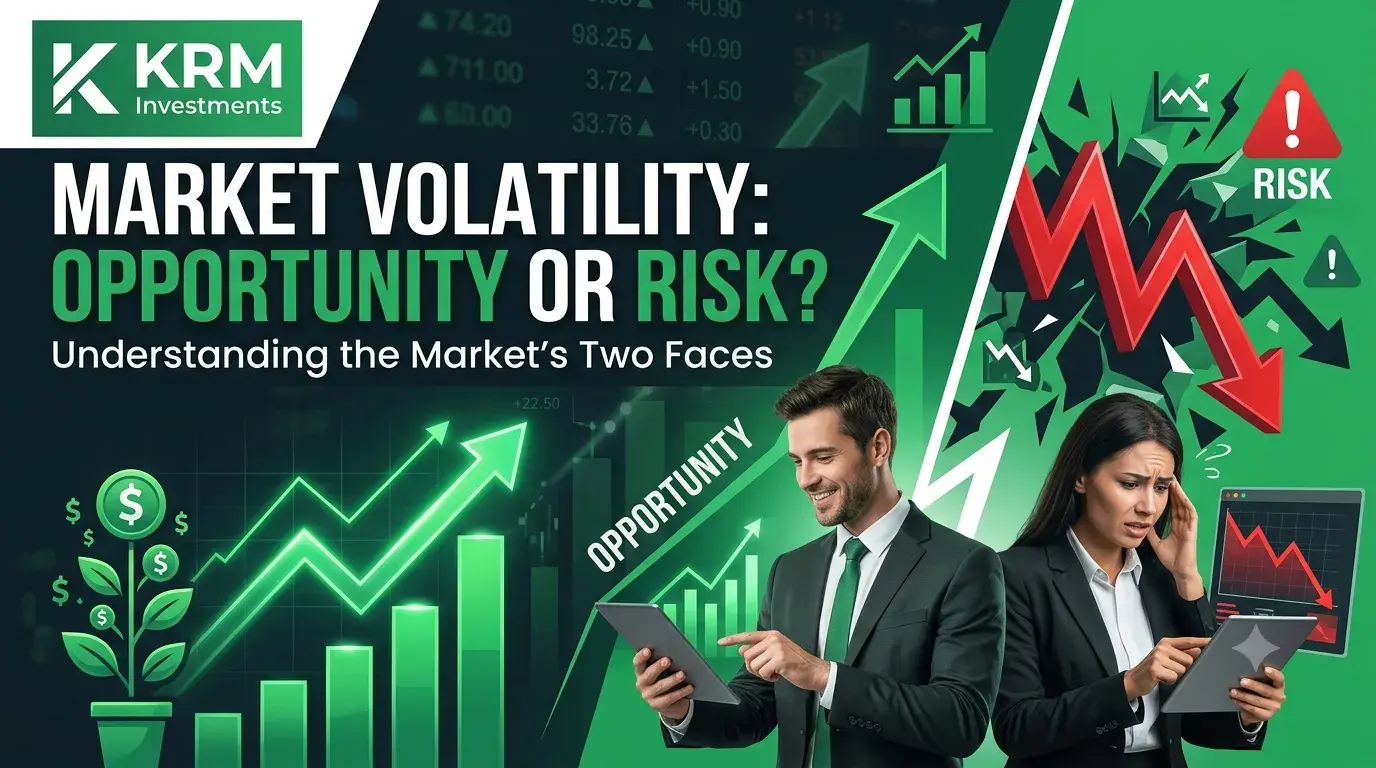
Market volatility can be both an opportunity and a risk depending on how investors respond to it. While volatility creates uncertainty, it also reinforces the importance of Financial Planning, Goal-Based Investing, Retirement Planning, Wealth Management, and disciplined Investment Planning. Investors who remain focused on long-term objectives, maintain consistent SIP Investment habits, and avoid emotional decision-making are often better positioned to pursue Long-Term Wealth Creation despite temporary market fluctuations. Ultimately, successful investing is not about avoiding volatility but learning how to navigate it with confidence and discipline.
Important Note
Every investor has different financial goals, investment horizons and risk tolerance. Investment decisions should always be aligned with your overall Financial Planning strategy.
💡 Pro Tip
Investing consistently through SIPs and reviewing your portfolio annually generally produces better long-term outcomes than trying to time the market.