Table of Contents
Key Takeaways
- Build wealth through disciplined long-term investing.
- Diversification helps manage risk.
- SIP Investment encourages investing consistency.
- Financial Planning should align investments with life goals.
- Periodic portfolio reviews are essential.
Understanding Bull Markets and Bear Markets
Introduction
Financial markets continuously move through different phases. Sometimes markets experience strong growth, while at other times they face declines and uncertainty. These periods are commonly known as bull markets and bear markets.
Understanding these market cycles helps investors make better decisions and avoid reacting emotionally to short-term movements.
At KRM Investments, established in 1997, we have guided investors through multiple market conditions. Our experience has shown that successful investing depends less on predicting every market movement and more on having a strong Financial Planning strategy.
This article explains bull markets, bear markets, their impact on investments, and how disciplined investors can navigate different market environments.
Table of Contents
- What Is a Bull Market?
- What Is a Bear Market?
- Difference Between Bull and Bear Markets
- How Investors Should Respond
- Role of SIP Investment During Market Cycles
- Importance of Financial Planning
- Common Investor Mistakes
- How KRM Investments Supports Investors
- FAQ Section
- Conclusion
- Call To Action
What Is a Bull Market?
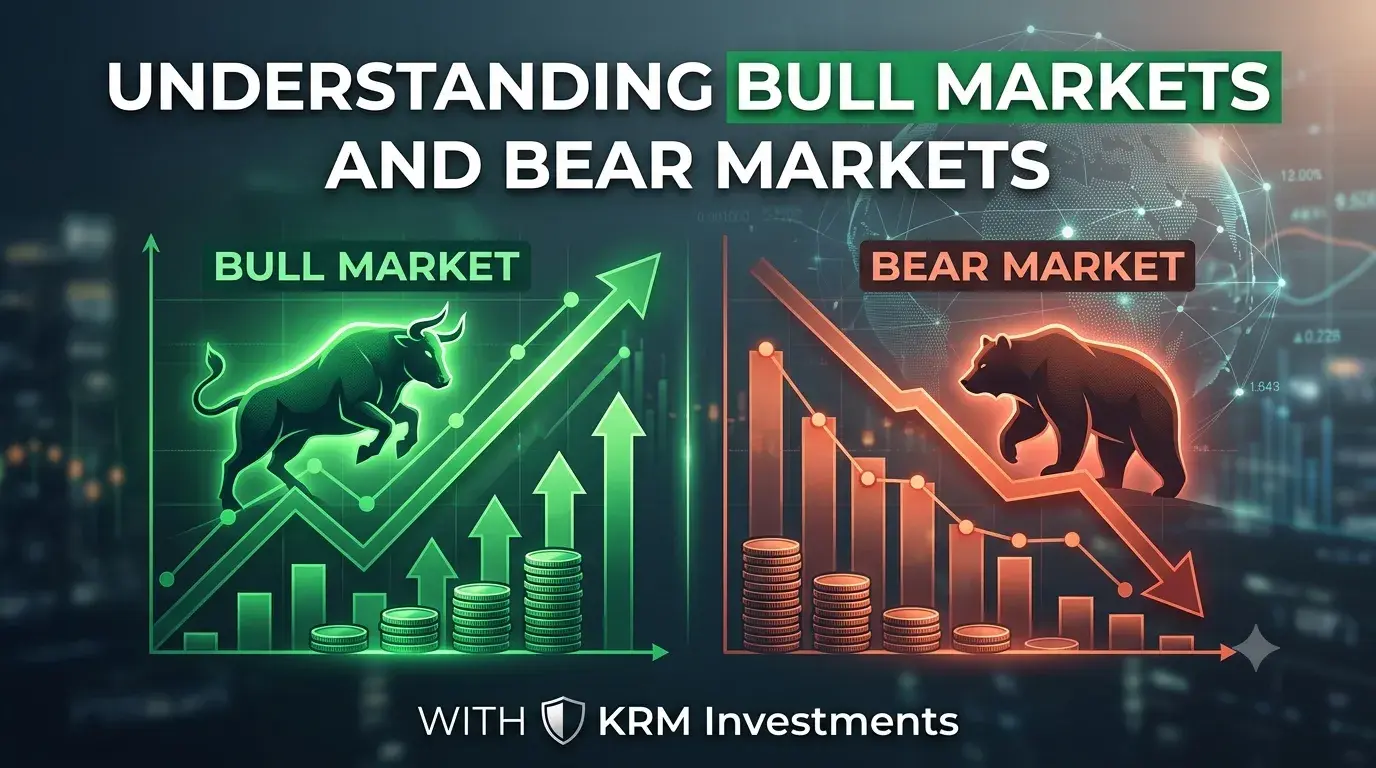
A bull market refers to a period when financial markets experience a sustained upward movement. During this phase, investor confidence is generally positive, economic conditions may improve, and investment values may increase.
Bull markets can create opportunities for investors, but they should not lead to excessive confidence or decisions based only on recent performance.
Even during strong markets, investors should continue following their long-term investment strategy.
What Is a Bear Market?
A bear market refers to a period when markets experience significant declines. It is often accompanied by uncertainty, negative sentiment, and increased investor concern.
Bear markets are a natural part of investing. They can occur due to economic changes, global events, or changing investor expectations.
For long-term investors, bear markets are periods that require patience and discipline rather than panic.
Difference Between Bull and Bear Markets
The main difference between bull and bear markets is the overall direction of market movement and investor sentiment.
- Bull Market: Rising markets with positive investor confidence.
- Bear Market: Falling markets with increased uncertainty.
- Bull Market: Investors may focus on growth opportunities.
- Bear Market: Investors need patience and disciplined planning.
How Investors Should Respond
Many investors make decisions based on emotions during different market cycles. However, successful investing requires a balanced approach.
During bull markets, investors should avoid unnecessary excitement. During bear markets, investors should avoid fear-based decisions.
A proper Investment Planning approach helps investors stay focused on long-term objectives.
Role of SIP Investment During Market Cycles
SIP Investment can help investors maintain consistency during both rising and falling markets.
Because SIP involves regular investing, it encourages investors to follow a disciplined approach instead of trying to predict market movements.
- Supports long-term investing habits.
- Reduces emotional reactions.
- Helps investors stay committed.
- Supports wealth creation over time.
Importance of Financial Planning
Financial Planning helps investors prepare for different market conditions. A strong plan considers goals, timelines, risk capacity, and investment strategy.
With proper planning, investors can focus on their objectives instead of being influenced by temporary market changes.
Common Investor Mistakes
Investors often make mistakes during different market phases:
- Investing only when markets are rising.
- Stopping investments during market declines.
- Following market trends without planning.
- Ignoring long-term goals.
Important Note
Every investor has different financial goals, investment horizons and risk tolerance. Investment decisions should always be aligned with your overall Financial Planning strategy.
💡 Pro Tip
Investing consistently through SIPs and reviewing your portfolio annually generally produces better long-term outcomes than trying to time the market.