Table of Contents
Key Takeaways
- Build wealth through disciplined long-term investing.
- Diversification helps manage risk.
- SIP Investment encourages investing consistency.
- Financial Planning should align investments with life goals.
- Periodic portfolio reviews are essential.
Understanding Mutual Fund Categories
Introduction
Mutual Funds have become one of the most widely used investment vehicles for individuals seeking professional management, diversification, and access to financial markets. However, many investors discover that Mutual Funds are not a single type of investment. Instead, they are available in multiple categories, each designed to serve different financial objectives, investment horizons, and risk preferences.
KRM Investments, established in 1997, has guided investors through changing market environments and evolving financial goals for decades. One of the most common questions investors ask is: Which type of Mutual Fund is suitable for my needs? The answer depends on factors such as Financial Planning objectives, risk tolerance, investment horizon, liquidity requirements, and long-term financial goals.
Understanding Mutual Fund categories is an important step toward making informed investment decisions. Rather than selecting funds based solely on recent performance, investors can benefit from understanding the purpose and characteristics of different fund types.
Whether the goal is wealth creation, income generation, retirement preparation, tax efficiency, or capital preservation, Mutual Fund categories provide investors with a variety of options that can be aligned with specific financial needs.
In this article, we explore the major Mutual Fund categories, their role in Investment Planning, and how they fit into broader Financial Planning, Goal-Based Investing, Retirement Planning, and Wealth Management strategies.
Table of Contents
- Why Mutual Fund Categories Matter
- Understanding Mutual Funds
- Major Mutual Fund Categories
- Role of Financial Planning
- How SIP Investment Works Across Categories
- Importance of Goal-Based Investing
- Common Mistakes Investors Make
- How Investors Should Select Fund Categories
Why Mutual Fund Categories Matter
Not all Mutual Funds serve the same purpose. Different categories are designed to address different investor needs, making it important to understand their characteristics before investing.
Some funds focus primarily on long-term growth, while others emphasize income generation, stability, liquidity, or tax-related objectives. Selecting an inappropriate category may create a mismatch between investments and financial goals.
For example, an investor planning for retirement several decades away may have different requirements than someone seeking short-term liquidity. Similarly, investors pursuing Long-Term Wealth Creation may prioritize different fund categories than those focused on preserving capital.
Understanding categories helps investors create portfolios that align with their objectives rather than relying solely on short-term performance comparisons.
This knowledge supports more effective Financial Planning and improves long-term decision-making.
Understanding Mutual Funds
Mutual Funds pool money from multiple investors and invest those funds according to a defined investment strategy. Professional fund managers oversee portfolio construction and management while investors participate through units of the fund.
One of the key advantages of Mutual Funds is diversification. By investing across multiple securities, funds can help reduce concentration risk compared to investing in a limited number of individual assets.
Mutual Funds also provide accessibility and flexibility. Investors can often begin investing with relatively modest amounts and choose from a wide range of categories suited to different financial objectives.
These features make Mutual Funds an important component of modern Investment Planning and Wealth Management strategies.
However, selecting the right category remains a critical step in achieving desired outcomes.
Major Mutual Fund Categories
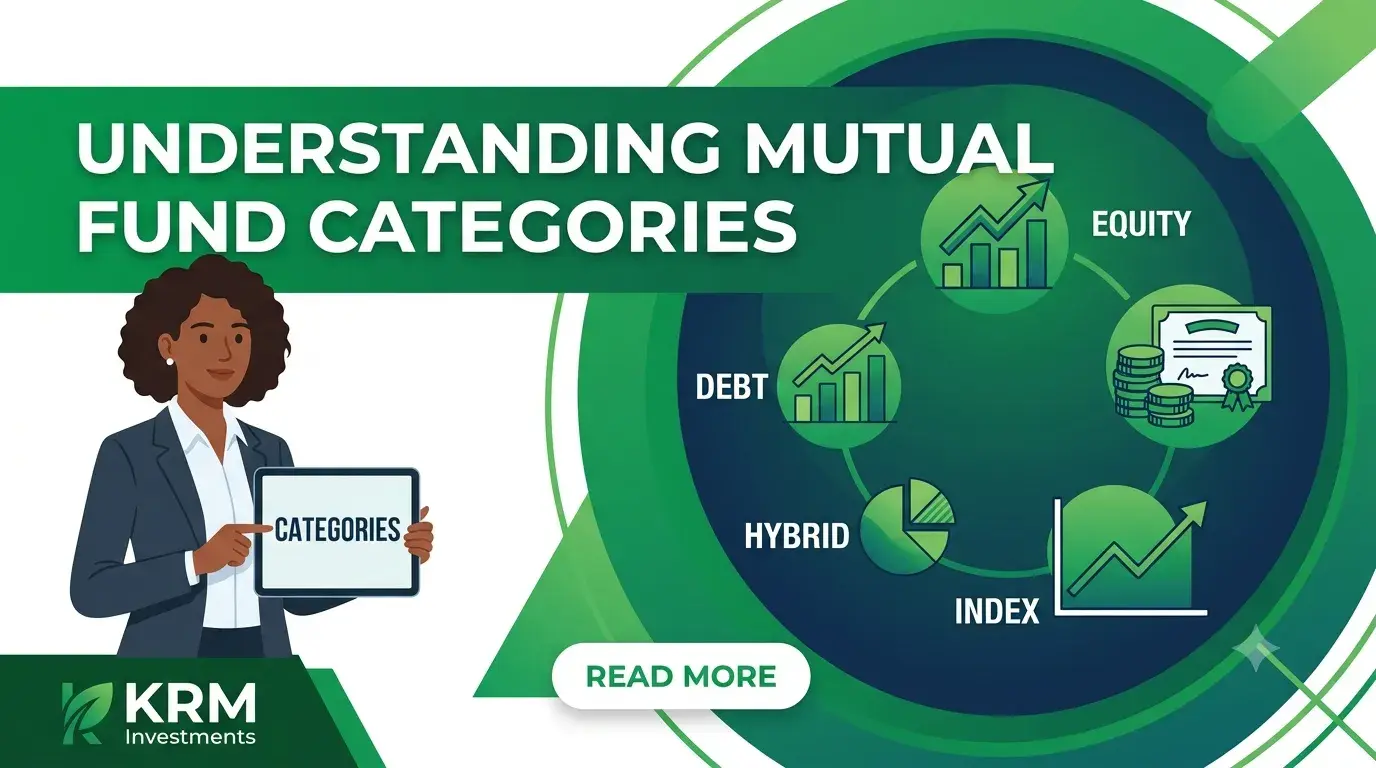
Mutual Funds are generally organized into categories based on their investment objectives and underlying asset allocation.
Equity-Oriented Funds
Equity-oriented funds primarily invest in shares of companies and are generally associated with long-term growth objectives. These funds may experience market volatility but are often considered by investors pursuing Long-Term Wealth Creation.
Debt-Oriented Funds
Debt-oriented funds primarily invest in fixed-income instruments. They are often used by investors seeking stability, income-oriented strategies, or lower portfolio volatility.
Hybrid Funds
Hybrid funds combine equity and debt investments within a single portfolio. These funds aim to provide a balance between growth opportunities and risk management.
Solution-Oriented Funds
Certain Mutual Funds are designed around specific financial objectives such as Retirement Planning or children's future needs. These funds encourage investors to maintain a long-term focus aligned with particular goals.
Tax Saving Funds
Tax Saving Investments may include specific Mutual Fund categories that provide tax-related benefits subject to prevailing regulations. These funds are often considered within broader Financial Planning strategies.
Liquid and Short-Term Funds
These categories focus on liquidity and short-term capital management. Investors may use them for emergency reserves or short-term financial objectives.
Each category serves a different purpose, reinforcing the importance of aligning fund selection with personal goals and financial circumstances.
Role of Financial Planning
Financial Planning provides the framework for selecting appropriate Mutual Fund categories. Rather than choosing funds based solely on popularity or recent returns, investors should begin by identifying financial goals and timelines.
A structured planning process helps determine how different categories may contribute to objectives such as Retirement Planning, wealth accumulation, education funding, emergency preparedness, or Tax Saving Investments.
Financial Planning also helps investors evaluate risk tolerance and liquidity requirements. These factors influence which categories may be appropriate for different stages of the investment journey.
Periodic reviews are equally important because financial circumstances and goals often evolve over time.
When integrated into a broader planning framework, Mutual Fund categories become tools for achieving meaningful financial outcomes.
How SIP Investment Works Across Categories
SIP Investment allows investors to invest regularly into Mutual Funds regardless of category. This disciplined approach helps build investment habits and encourages long-term participation.
Investors can use SIP Investment to pursue a variety of goals through different fund categories. For example, long-term wealth creation objectives may involve growth-oriented categories, while other goals may prioritize stability or income generation.
SIPs help reduce the temptation to time markets and encourage consistency. Regular investing often becomes more important than attempting to predict short-term market movements.
Because Mutual Funds offer access to multiple categories, SIP Investment provides flexibility in constructing diversified portfolios aligned with Financial Planning objectives.
This combination of discipline and diversification can support sustainable Investment Planning strategies.
Importance of Goal-Based Investing
Goal-Based Investing helps investors select Mutual Fund categories according to specific financial objectives rather than market trends.
Different goals typically require different investment approaches. Retirement Planning, children's education, emergency reserves, wealth accumulation, and Tax Saving Investments may each involve distinct fund categories.
By focusing on goals first, investors gain greater clarity regarding category selection and portfolio construction.
Goal-Based Investing also helps investors remain disciplined during periods of market volatility because decisions are tied to long-term objectives rather than short-term market performance.
This approach often improves financial confidence and strengthens commitment to investment plans.
Common Mistakes Investors Make
Many investors encounter challenges because they do not fully understand Mutual Fund categories before investing.
- Selecting funds based only on recent performance.
- Ignoring investment objectives and time horizons.
- Choosing categories inconsistent with risk tolerance.
- Failing to diversify across appropriate fund categories.
- Switching categories frequently due to market news.
- Ignoring Retirement Planning requirements.
- Investing without clear financial goals.
- Overlooking Tax Saving Investments opportunities.
- Stopping SIP Investment contributions during volatility.
- Failing to review portfolios periodically.
Avoiding these mistakes can help investors make more informed decisions and improve long-term outcomes.
How Investors Should Select Fund Categories
Selecting Mutual Fund categories should begin with understanding personal financial goals, risk tolerance, and investment horizons. Investors should identify what they want to achieve before evaluating specific funds.
A practical approach includes defining objectives, estimating future financial needs, assessing risk capacity, and choosing categories that align with those requirements.
Diversification may also play an important role. Different categories can contribute unique benefits within a broader portfolio structure.
Regular portfolio reviews help ensure that category selections remain aligned with evolving goals and changing financial circumstances.
Mutual Fund categories provide investors with a wide range of tools for achieving financial objectives. When combined with Financial Planning, SIP Investment, Goal-Based Investing, Retirement Planning, Wealth Management, Tax Saving Investments, and disciplined Investment Planning, these categories can support sustainable Long-Term Wealth Creation. Understanding how different categories function empowers investors to make informed decisions and build portfolios aligned with their unique financial journeys.
Important Note
Every investor has different financial goals, investment horizons and risk tolerance. Investment decisions should always be aligned with your overall Financial Planning strategy.
💡 Pro Tip
Investing consistently through SIPs and reviewing your portfolio annually generally produces better long-term outcomes than trying to time the market.