Table of Contents
- Introduction
- Table of Contents
- Why This Matters
- The Investment Environment in 1997
- Lessons From Long-Term Investors
- Role of Financial Planning Across Generations
- Role of SIP Investment and Consistency
- Importance of Goal-Based Investing
- Common Mistakes Modern Investors Make
- How Investors Should Apply These Lessons Today
Key Takeaways
- Build wealth through disciplined long-term investing.
- Diversification helps manage risk.
- SIP Investment encourages investing consistency.
- Financial Planning should align investments with life goals.
- Periodic portfolio reviews are essential.
What 1997 Investors Can Teach Today's Investors About Building Long-Term Wealth
Introduction
The investment world has changed dramatically over the past few decades. Technology has transformed how investors access information, execute transactions, and monitor portfolios. Financial products have expanded, and investment opportunities have become more accessible than ever before. Yet despite all these changes, some of the most valuable investing lessons remain remarkably unchanged.
At KRM Investments, established in 1997, we have witnessed multiple market cycles, economic shifts, periods of uncertainty, and phases of extraordinary growth. Looking back at the investors who started their journey in 1997 provides valuable insights for today's generation of investors.
While markets, products, and technologies evolve, the principles that drive successful Financial Planning and Long-Term Wealth Creation remain consistent. This article explores what today's investors can learn from the habits, mindset, and discipline of investors who began investing nearly three decades ago.
Table of Contents
- Why This Matters
- The Investment Environment in 1997
- Lessons From Long-Term Investors
- Role of Financial Planning Across Generations
- Role of SIP Investment and Consistency
- Importance of Goal-Based Investing
- Common Mistakes Modern Investors Make
- How Investors Should Apply These Lessons Today
Why This Matters
Many investors spend significant time searching for the next market opportunity, the best-performing fund, or the latest investment trend. However, some of the most powerful lessons come from studying investors who successfully stayed invested over long periods.
Investors who began their journey in 1997 experienced market booms, corrections, global financial crises, economic reforms, and changing investment landscapes. Those who remained disciplined often learned that successful investing depends less on prediction and more on consistency.
Understanding these lessons can help investors strengthen their Financial Planning approach and make better long-term decisions.
The Investment Environment in 1997
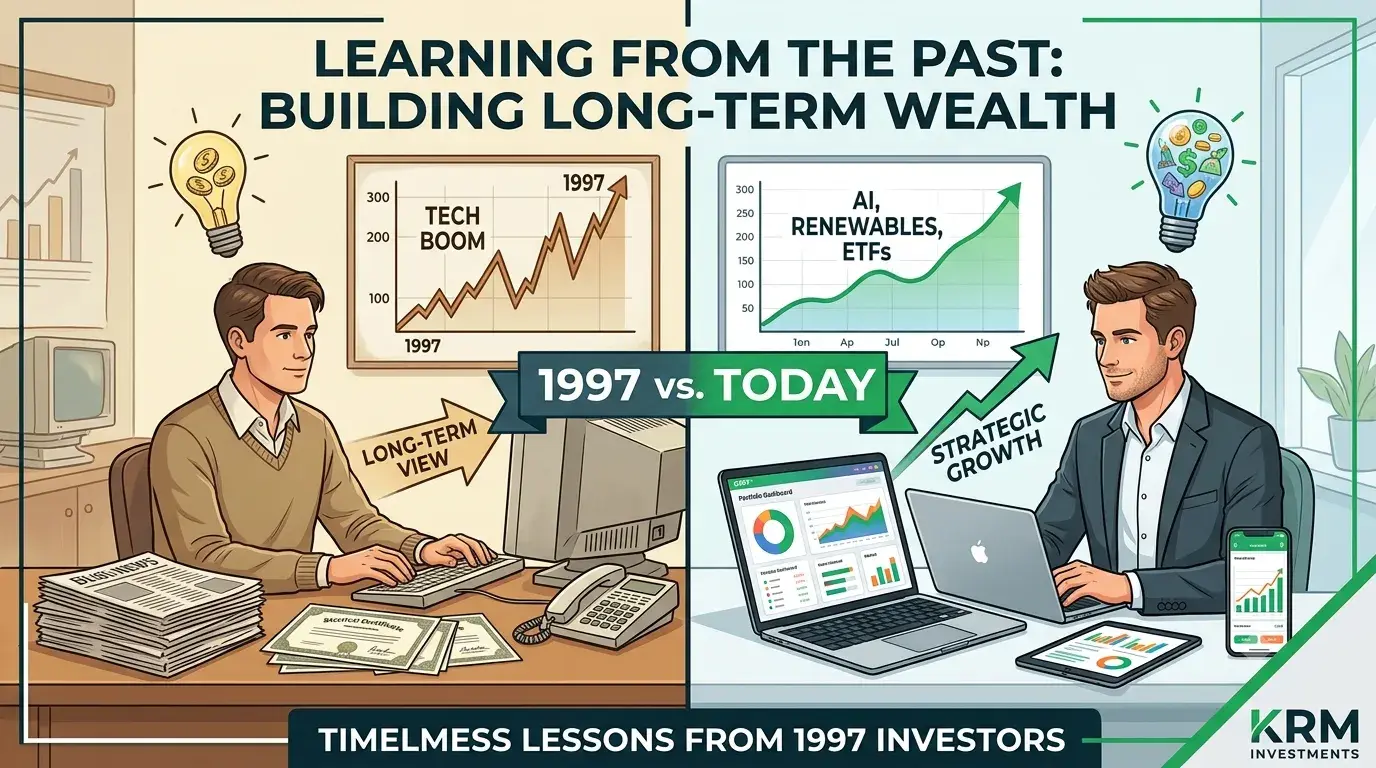
Investing in 1997 was very different from investing today. Access to information was limited compared to the digital era. Investors did not have instant portfolio tracking apps, real-time financial news alerts, or online research platforms.
Investment decisions often relied on financial advisors, printed reports, and personal research. Transactions could take longer, and portfolio reviews were not as convenient as they are today.
Despite these limitations, many successful investors developed habits that remain relevant today:
- Patience and discipline
- Long-term thinking
- Goal-oriented investing
- Trust in structured Financial Planning
- Commitment to regular investing
Ironically, the absence of constant market updates may have helped some investors remain focused on long-term objectives rather than reacting to daily market movements.
Lessons From Long-Term Investors
One of the most important lessons from 1997 investors is that wealth creation is usually a gradual process.
Many successful investors did not achieve their financial goals through aggressive trading or frequent portfolio changes. Instead, they focused on:
- Regular investing
- Patience during market volatility
- Diversification
- Financial Planning discipline
- Long-term commitment to goals
Markets naturally experience periods of uncertainty. Investors who remained invested through different market cycles often benefited from the long-term growth of businesses and the economy.
This reinforces a timeless principle: consistency often matters more than perfection.
Role of Financial Planning Across Generations
Whether in 1997 or today, Financial Planning remains one of the most important foundations of successful investing.
Investors who built wealth over long periods typically followed structured plans rather than making random investment decisions.
Effective Financial Planning includes:
- Setting clear financial goals
- Creating an appropriate asset allocation strategy
- Managing risk
- Planning for retirement
- Reviewing progress regularly
- Incorporating Tax Saving Investments where appropriate
Technology may have changed the tools available to investors, but the need for structured planning remains unchanged.
Financial Planning provides direction and helps investors stay focused during periods of uncertainty.
Role of SIP Investment and Consistency
Although systematic investing has become significantly more popular in recent years, the principle behind SIP Investment reflects a habit that many successful long-term investors have followed for decades.
Regular investing offers several benefits:
- Promotes disciplined behavior
- Encourages long-term participation
- Reduces emotional decision-making
- Supports Goal-Based Investing
- Helps investors remain consistent through market cycles
SIP Investment removes much of the pressure associated with trying to predict market highs and lows. Instead, investors focus on contributing regularly toward their financial objectives.
This approach aligns closely with the habits demonstrated by many successful investors who started their journey in the late 1990s.
Importance of Goal-Based Investing
One common characteristic among disciplined investors is that they invest with purpose.
Rather than focusing solely on returns, they align investments with specific life goals such as:
- Children's education
- Retirement Planning
- Home ownership
- Business growth
- Family security
- Long-Term Wealth Creation
Goal-Based Investing creates clarity and helps investors maintain commitment during challenging periods.
When investments are connected to meaningful goals, investors are often less likely to make impulsive decisions based on short-term market events.
Common Mistakes Modern Investors Make
Despite having access to more information than ever before, today's investors sometimes face challenges that earlier generations encountered less frequently.
- Overreacting to daily market news
- Chasing recent performance
- Frequent portfolio switching
- Ignoring Financial Planning
- Focusing only on short-term returns
- Following investment trends without proper research
Constant access to information can sometimes create unnecessary noise. Investors may feel pressure to act frequently even when no action is required.
Long-term investors from 1997 demonstrate that successful investing often requires patience and discipline rather than continuous activity.
How Investors Should Apply These Lessons Today
Modern investors can benefit from combining today's tools with timeless investing principles.
Some practical approaches include:
- Create a structured Financial Planning strategy.
- Focus on Goal-Based Investing.
- Use SIP Investment for long-term accumulation.
- Maintain diversified portfolios.
- Review investments periodically rather than constantly.
- Prepare for Retirement Planning early.
- Consider appropriate Tax Saving Investments.
- Remain committed to Long-Term Wealth Creation.
Technology can improve efficiency, but discipline remains the most important investment skill. Investors who combine modern resources with proven long-term principles may be better positioned to achieve their financial goals.
The greatest lesson from 1997 investors is simple: successful investing is often the result of patience, consistency, and staying focused on long-term goals.
Important Note
Every investor has different financial goals, investment horizons and risk tolerance. Investment decisions should always be aligned with your overall Financial Planning strategy.
💡 Pro Tip
Investing consistently through SIPs and reviewing your portfolio annually generally produces better long-term outcomes than trying to time the market.