Table of Contents
Key Takeaways
- Build wealth through disciplined long-term investing.
- Diversification helps manage risk.
- SIP Investment encourages investing consistency.
- Financial Planning should align investments with life goals.
- Periodic portfolio reviews are essential.
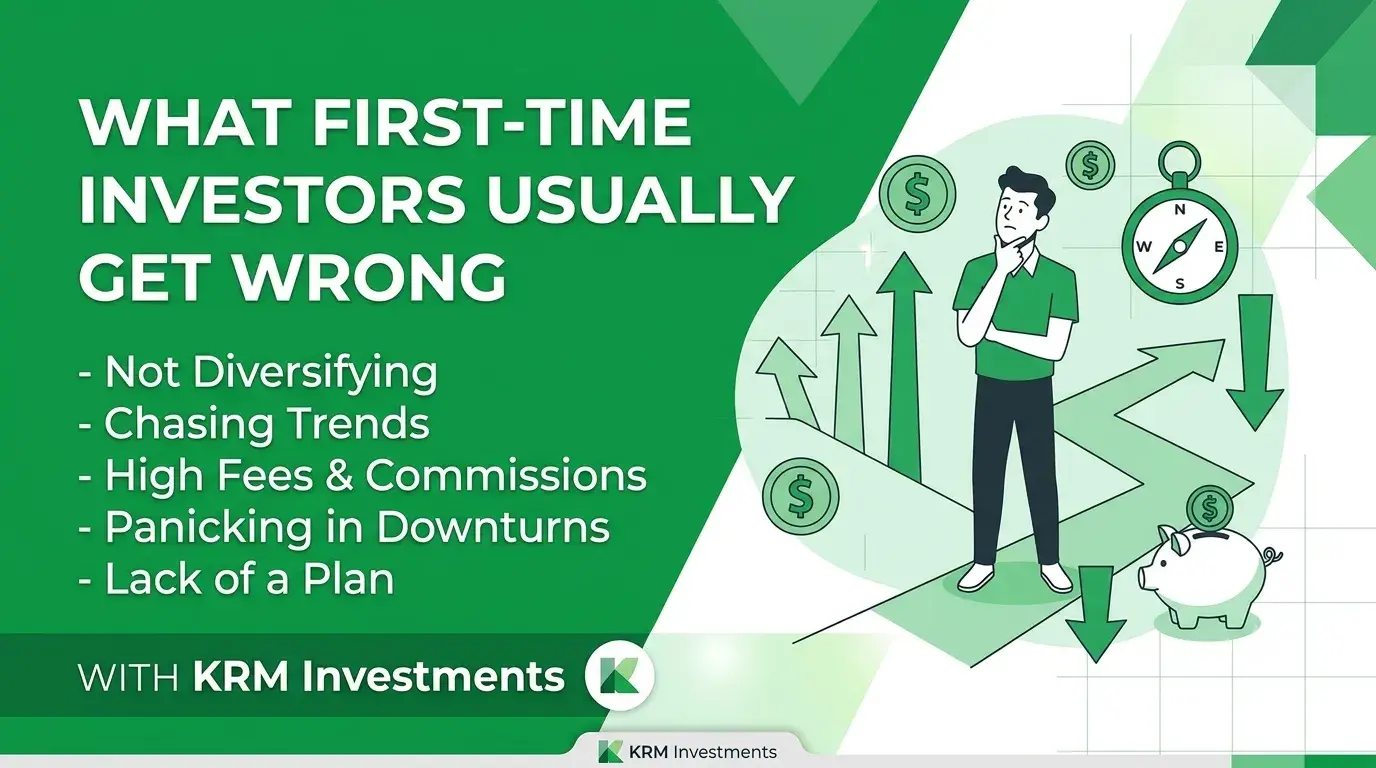
What First-Time Investors Usually Get Wrong
Introduction
Starting an investment journey is an important financial milestone. For many people, the first step toward investing brings excitement, questions, and uncertainty. They want to create wealth but may not always know the right approach.
Over years of helping investors, KRM Investments has observed that first-time investors often make mistakes not because they lack interest, but because they begin without proper guidance and planning.
Since 1997, we have helped investors understand that successful investing is not about finding quick returns. It is about creating a strong foundation through Financial Planning, disciplined Investment Planning, and long-term commitment.
This article explains common mistakes first-time investors make and how avoiding them can help build a stronger financial future.
Table of Contents
- Starting Without a Financial Plan
- Focusing Only on Returns
- Ignoring Investment Goals
- Trying to Time the Market
- Stopping Investments During Market Falls
- Importance of SIP Investment
- Role of a Financial Advisor India
- How KRM Investments Guides New Investors
- FAQ Section
- Conclusion
- Call To Action
Starting Without a Financial Plan
One of the most common mistakes first-time investors make is investing without understanding their financial goals.
Many investors start because they hear about a popular investment option or see others earning returns. However, every investor has different needs, responsibilities, and risk levels.
A proper Financial Planning approach helps investors understand:
- Why they are investing.
- How much they should invest.
- Which options match their goals.
- How long they should remain invested.
Without a plan, investments may become random decisions rather than part of a clear strategy.
Focusing Only on Returns
Many new investors focus only on finding the highest returns. While returns are important, they are not the only factor that determines investment success.
The right investment depends on goals, risk capacity, and investment timeline.
For example, retirement planning requires a different approach compared with short-term goals. A good investment strategy balances growth, risk, and financial objectives.
Ignoring Investment Goals
Investments become more effective when they are connected with specific goals. Goal-Based Investing helps investors create a purpose-driven approach.
Instead of asking only, “Where should I invest?” investors should also ask, “What do I want this investment to achieve?”
Clear goals help investors stay disciplined and make better decisions.
Trying to Time the Market
Many first-time investors believe they need to find the perfect time to enter or exit the market. However, predicting every market movement is extremely difficult.
Successful investors usually focus on consistency rather than perfect timing.
A disciplined approach helps investors participate through different market cycles.
Stopping Investments During Market Falls
Market declines can create fear, especially for new investors. Seeing investment values reduce may create doubts about continuing the investment journey.
However, market movements are a natural part of investing. Investors with proper planning understand that temporary declines do not always change long-term objectives.
SIP Investment helps investors stay disciplined by encouraging regular investing during different market conditions.
Importance of SIP Investment
SIP Investment is often preferred by first-time investors because it creates a structured and simple way to begin investing.
- Builds regular investment habits.
- Supports long-term wealth creation.
- Reduces emotional decisions.
- Helps align investments with goals.
Role of a Financial Advisor India
A Financial Advisor India helps investors understand their financial situation and create suitable investment strategies.
Professional guidance can help first-time investors avoid common mistakes and stay focused on long-term goals.
Important Note
Every investor has different financial goals, investment horizons and risk tolerance. Investment decisions should always be aligned with your overall Financial Planning strategy.
💡 Pro Tip
Investing consistently through SIPs and reviewing your portfolio annually generally produces better long-term outcomes than trying to time the market.