Table of Contents
- Introduction
- Table of Contents
- Why SIP Investment Matters
- Understanding What Happens When You Stop a SIP
- Impact on Long-Term Wealth Creation
- Role of Financial Planning Before Stopping a SIP
- Common Reasons Investors Stop SIPs
- Mistakes Investors Should Avoid
- Alternative Approaches to Consider
- How KRM Investments Helps Investors Stay on Track
Key Takeaways
- Build wealth through disciplined long-term investing.
- Diversification helps manage risk.
- SIP Investment encourages investing consistency.
- Financial Planning should align investments with life goals.
- Periodic portfolio reviews are essential.
What Happens If I Stop My SIP? Understanding the Impact on Long-Term Financial Goals
Introduction
SIP Investment has become one of the most popular ways for investors to participate in Mutual Funds and pursue long-term financial goals. Its simplicity, flexibility, and disciplined structure make it an effective tool for Goal-Based Investing and Long-Term Wealth Creation.
However, many investors eventually face a common question: What happens if I stop my SIP? This situation may arise due to changes in income, unexpected expenses, market volatility, shifting financial priorities, or uncertainty about future investment decisions.
At KRM Investments, established in 1997, we have guided investors through various market cycles and personal financial situations. One observation remains consistent: decisions regarding SIP Investment should always be evaluated within the broader context of Financial Planning rather than based solely on short-term market events.
This article explains what happens when a SIP is stopped, how it may affect long-term financial goals, and the factors investors should consider before making such a decision.
Table of Contents
- Why SIP Investment Matters
- Understanding What Happens When You Stop a SIP
- Impact on Long-Term Wealth Creation
- Role of Financial Planning Before Stopping a SIP
- Common Reasons Investors Stop SIPs
- Mistakes Investors Should Avoid
- Alternative Approaches to Consider
- How KRM Investments Helps Investors Stay on Track
Why SIP Investment Matters
SIP Investment is designed to help investors contribute regularly toward long-term financial goals. Instead of investing large amounts at once, investors allocate smaller amounts periodically, often monthly, into Mutual Funds.
This disciplined approach supports:
- Consistent investing habits
- Goal-Based Investing
- Long-term accumulation of wealth
- Financial discipline
- Participation across different market conditions
For many investors, SIPs become an integral part of Financial Planning because they help automate the investment process and reduce emotional decision-making.
Understanding What Happens When You Stop a SIP
One of the most important points investors should understand is that stopping a SIP does not automatically mean selling existing Mutual Fund investments.
In most cases, when a SIP is stopped:
- Future contributions cease.
- Existing investments remain invested unless redeemed separately.
- The portfolio continues to experience market movements.
- Potential future accumulation from regular investments stops.
This distinction is important because stopping a SIP and redeeming investments are two different decisions with different implications.
Investors should evaluate both actions carefully within their broader Investment Planning strategy.
Impact on Long-Term Wealth Creation
The most significant consequence of stopping a SIP is often the interruption of long-term investment discipline.
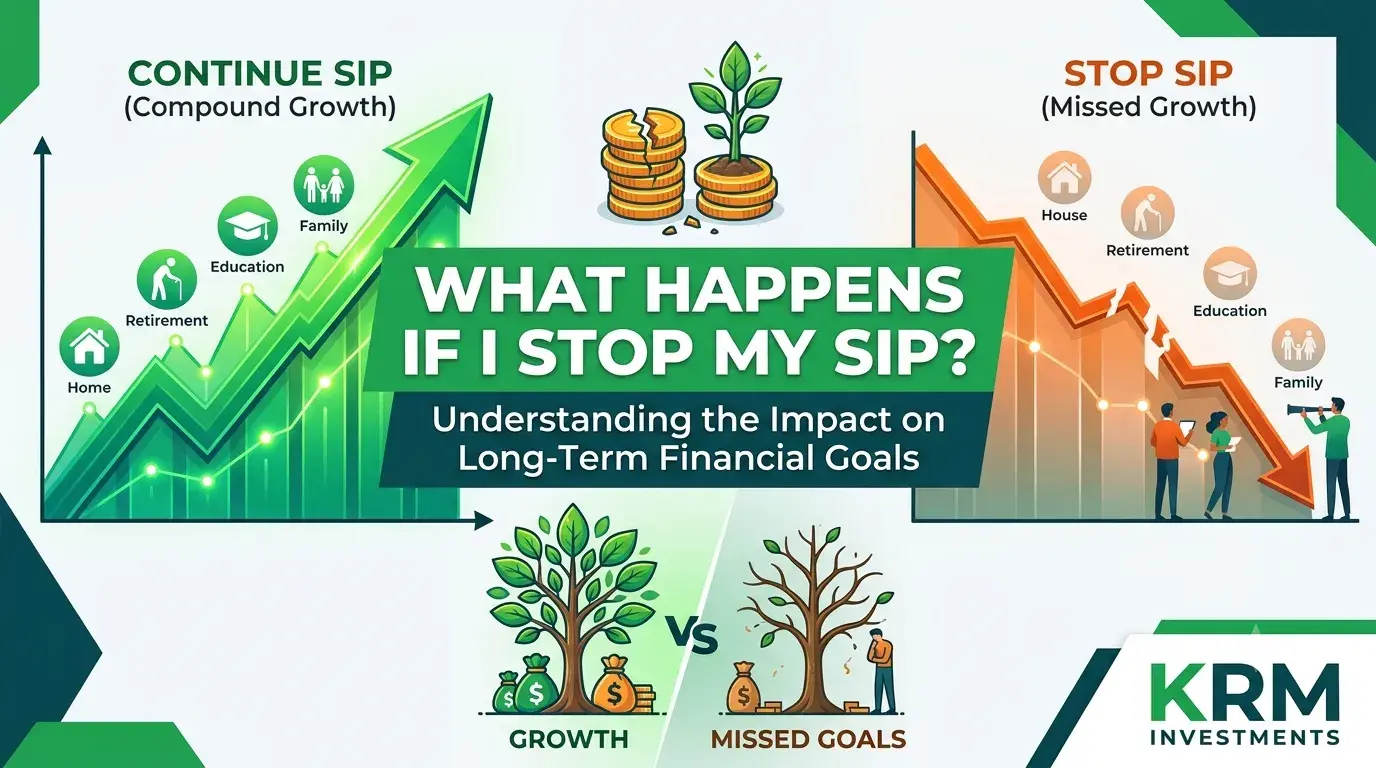
Long-Term Wealth Creation frequently depends on consistent investing over extended periods. When regular contributions stop, investors may miss opportunities to continue building their investment corpus.
Potential impacts may include:
- Reduced future investment accumulation
- Slower progress toward financial goals
- Lower contributions to retirement savings
- Delays in achieving education or family goals
- Disruption of Goal-Based Investing strategies
The actual impact depends on factors such as the investment horizon, contribution amount, financial goals, and overall Financial Planning strategy.
Role of Financial Planning Before Stopping a SIP
Before stopping a SIP Investment, investors should assess the decision within the context of their Financial Planning objectives.
Important considerations include:
- Current financial goals
- Emergency cash requirements
- Retirement Planning objectives
- Children's education goals
- Existing investments and assets
- Overall Wealth Management strategy
Financial Planning helps investors understand whether stopping a SIP is a temporary adjustment or a decision that may affect long-term goals.
A structured review often provides greater clarity than reacting to short-term events or emotions.
Common Reasons Investors Stop SIPs
Investors stop SIPs for various reasons, some of which may be temporary while others reflect broader changes in financial circumstances.
Common reasons include:
- Income disruptions
- Unexpected expenses
- Major life events
- Market volatility concerns
- Changing financial priorities
- Reallocation of investments
While some situations may justify reviewing investment plans, decisions should ideally be guided by Financial Planning principles rather than short-term market sentiment.
Understanding the underlying reason for stopping a SIP can help investors make more informed decisions.
Mistakes Investors Should Avoid
Several mistakes commonly occur when investors consider stopping SIP Investments.
- Stopping SIPs solely because markets are declining
- Making decisions based on fear or uncertainty
- Ignoring long-term financial goals
- Failing to review Financial Planning objectives
- Expecting immediate investment results
- Abandoning Goal-Based Investing strategies
Market volatility is a normal part of investing. Investors who focus exclusively on short-term fluctuations may unintentionally undermine their long-term objectives.
Maintaining perspective is often one of the most valuable investment skills.
Alternative Approaches to Consider
Before completely stopping a SIP, investors may wish to evaluate alternative approaches depending on their financial circumstances.
- Review and adjust financial goals.
- Evaluate overall cash flow requirements.
- Reassess investment priorities.
- Consider temporary adjustments if necessary.
- Seek professional Financial Planning guidance.
The most appropriate solution depends on individual circumstances, financial obligations, and long-term objectives.
A thoughtful review often helps investors make decisions that align with both current needs and future goals.
How KRM Investments Helps Investors Stay on Track
Since 1997, KRM Investments has helped investors navigate changing market conditions and personal financial situations through structured Financial Planning and disciplined investing strategies.
We understand that financial circumstances evolve, and investment decisions should be evaluated within the context of broader goals rather than isolated events.
Our services include:
- Mutual Funds
- SIP Planning
- Financial Planning
- Goal-Based Investing
- Retirement Planning
- Tax Saving Investments
- Wealth Management
By helping investors maintain clarity and discipline, we support informed decision-making and long-term financial confidence.
Stopping a SIP is not merely an investment decision. It is a Financial Planning decision that should be evaluated in relation to future goals, long-term wealth creation, and overall financial well-being.
Important Note
Every investor has different financial goals, investment horizons and risk tolerance. Investment decisions should always be aligned with your overall Financial Planning strategy.
💡 Pro Tip
Investing consistently through SIPs and reviewing your portfolio annually generally produces better long-term outcomes than trying to time the market.